I used to think that trees had deep roots – that if a person could see the underground part of a tree it would be a mirror image of the tree itself.
Turns out that’s not true. Most tree roots are in the top three feet of soil, and a majority of those are in the top twelve inches.
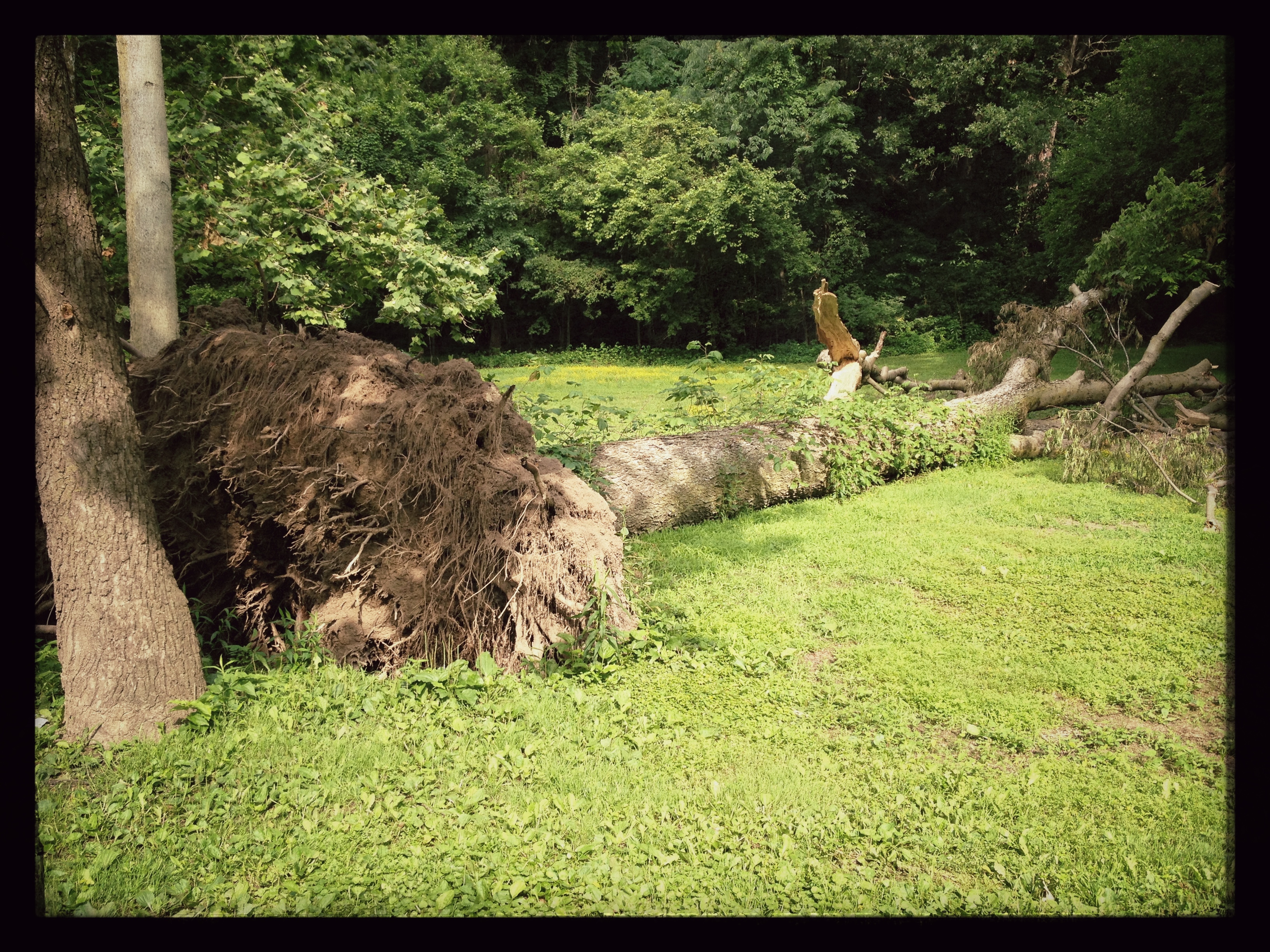
I suppose that’s why this can sometimes happen:
Unrooted (Photo: CKirgiss)
A big ole’ tree, just up and tumbled down in a wind storm, roots and all.
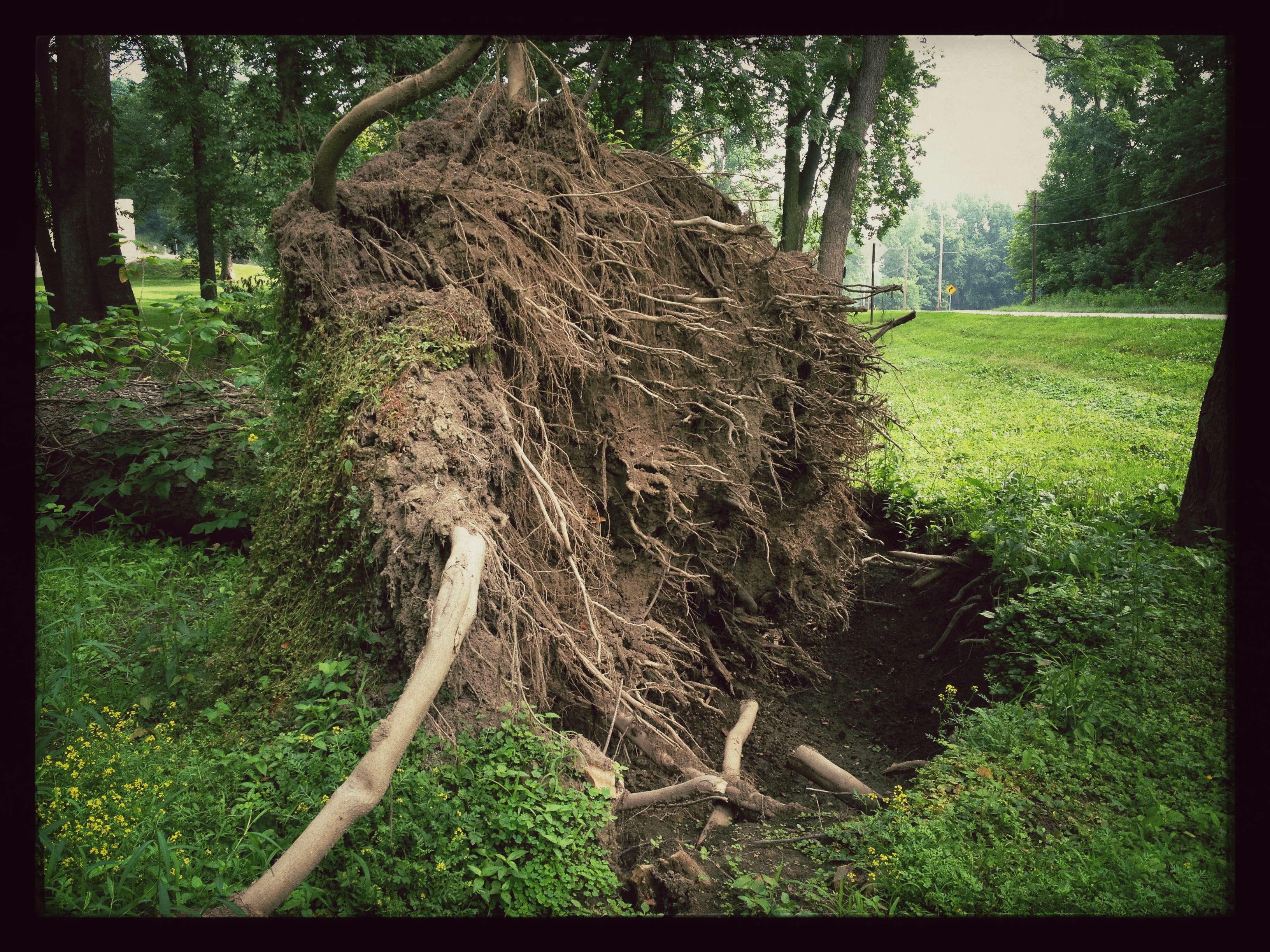
It left a mighty big hole behind, but not near so big as I used to think the root hole of such a giant tree would be.
Unrooted (Photo: CKirgiss)
Jesus’ parable about the seeds makes it clear that deep roots are necessary for a fruitful life.
But deep roots don’t just happen.
They require regular watering (in with life) and diligent weeding (out with death).
But in another sense, deep roots do just happen.
When Christ makes his home in our hearts and when we trust in him, our roots will grow down into God’s love and keep us strong (Ephesians 3:17). As we continue to follow him and let our roots grow down into him, our lives will be built up on him (Colossians 2:7).
In one of the many ironies of Christianity, I have no power on my own to grow deep roots in Christ, but I do have every freedom to prevent deep roots from growing –
– by not drinking deeply of his living water
– by not soaking up his brilliant light
– by not welcoming his gardener’s care
– and mostly by not redirecting myself from self towards him.
Like the tallest tree, I will surely tumble and fall if my roots are sunk into the stinky, rotten, stony soil of me rather than the sweet, rich, saving soil of Jesus.
The noble phrase “grow where you’re planted” is subtly undergirded with self-importance and achievement.
Better to “be planted where you will grow.” Where true Light shines (on even the darkest days). Where living Water flows (through even the driest lands). Where utter Truth prevails (in even the murkiest worlds). And where a loving Gardener does all the necessary work to produce fruitful lives.
[This post is the first in a series in which I reflect on spending a month at camp for Wyldlife (middle schoolers) and YoungLives (teen moms). You can follow the series by subscribing to this blog. All posts will be categorized as ‘Michindoh 2013’.]
Yesterday (June 8) 350+ middle school students and their leaders pulled into a beautiful and sacred space known as Michindoh, located in the mitten state, specifically the lower mid-palm region. It would be cooler to say “in the thumb” or “on the ring finger.” But we are where we are, which is the lower mid-palm region. I would argue that in real life, the lower mid-palm region is where it’s at.
So what if it can’t point, can’t oppose, can’t wear a ring, can’t snap, can’t tap, or any of those other things that fingers and thumbs do.
Without the lower mid-palm region providing a place from which fingers and thumbs can do their business by connecting them to the arm to the shoulder to the body to the brain that tells them what to do, fingers and thumbs would be entirely pointless, really.
Michindoh – like every other camp run by God-loving Jesus-following folk – is nothing more than a place from which those who are the hands and feet (or fingers and thumbs) of Jesus can do their business, which is loving God and following Jesus among (in this case) middle schoolers and teen moms in the hopes that they see something about the Christian life that is so utterly attractive, appealing, and sweet they can’t help but notice.
If it were by our own power that God-loving and Jesus-following folk hoped to reflect an utterly attractive, appealing, and sweet life with Christ, all would be lost (which, in fact, is exactly what all God-loving and Jesus-following folk once were). For there is nothing about the inherent essence of anyone that could ever possibly accomplish such a thing. On our own, we are appalling, repellant, and (I suspect) as far from being a sweet aroma as the east is from the west.
But with the Spirit’s presence drenching our souls in His love, grace, forgiveness, and re-creation, suddenly (miraculously, undeservedly, assuredly) the beautifully attractive, appealing, and sweet Jesus can shine through – even if just a tiny bit – into a world that is far too dark and much too broken.
That’s why we are here, joyfully settled into this lower mid-palm region of the kingdom, working together to be the fingers and thumbs of a hand that will (by God’s grace) point people to the face and feet of Jesus. Should they choose to look, in His face they will see his endless love for them reflected in His eyes. Should they embrace that love, at His feet they will fall in sweet surrender to the God-man who gave up everything in order to give new life.
I cannot image being any other place doing any other thing for any other reason – being in the lower mid-palm region of the hand of Jesus is really that big of a deal.
Week 1, night 1, 8:29 p.m. (Photo: CKirgiss)Week 1, night 1, 8:37 p.m. Let’s do this. (Photo: CKirgiss)
During the past five weeks, this blog has been silent for all kinds of reasons. Important reasons. Significant reasons. Meaningful reasons.
Reasons that amount to less-than-piffle in the grand scheme of the grand universe, a grandness that is often best realized in the most un-grand of places during the most un-grand of times, say, the lawn’s border bushes at 9:07 on a Sunday morning.
During the past five weeks, I finished a dissertation. Defended a dissertation. Was hooded by an esteemed academic.
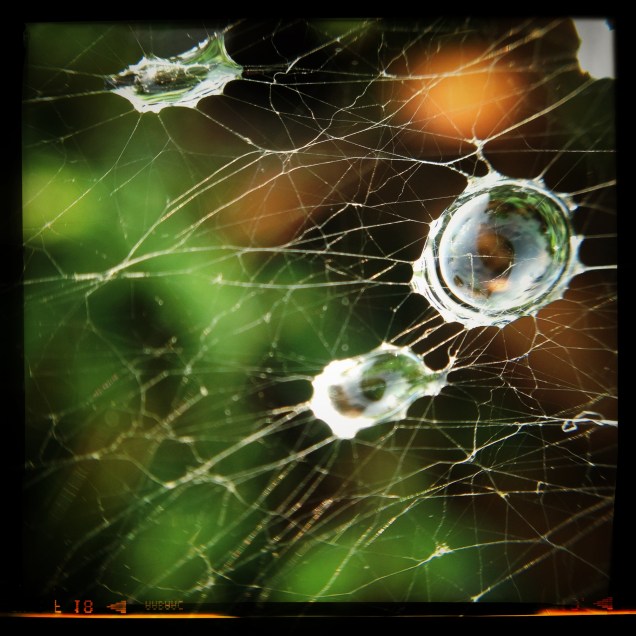
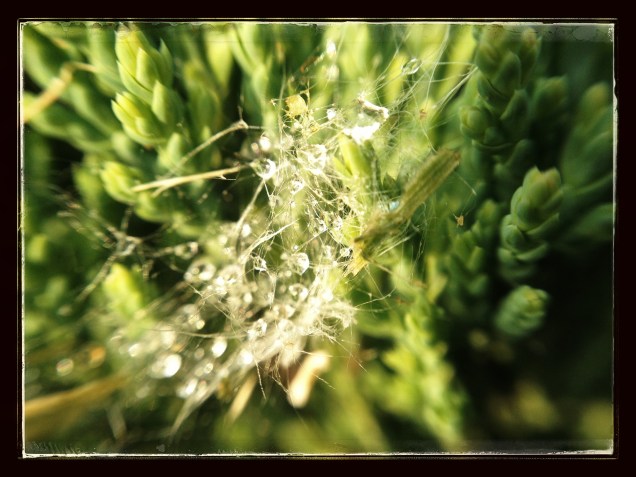
. . . while each morning, the dew fell to the ground, landing on leaf and rock and web alike, a miniature miracle reflecting God’s power, creativity, and joy.
All of which had absolutely nothing to do with my significant, important, and meaningful things.
Not even the tiniest bit.
What manner of grace is this that God would (does) allow a world full of supremely legit, significant, important, and meaningful folk enjoy, revel in, and (if all goes well) be humbled by the drops with which he paints the morning ground in a dazzling splendor of diamond dew?
What manner, indeed.
The silence brought on by significant, important, and meaningful busyness (whether we like it or not) does nothing more than reveal the empty spaces and confused graces of our lives.
The silence embodied in God’s elegant, astounding, and breathtaking creation (if we allow it) fills our empty spaces with unspeakable joy and boundless hope.
Of these two silences, the world esteems the first and disdains the second.
Though a wordsmith and a talker at my core, I readily concede that sometimes a picture says what words cannot.
And so, these pictures from the past days:
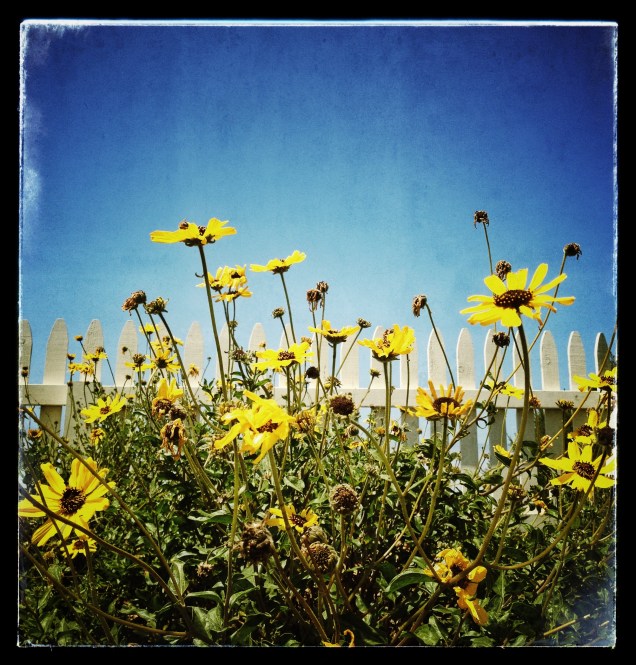
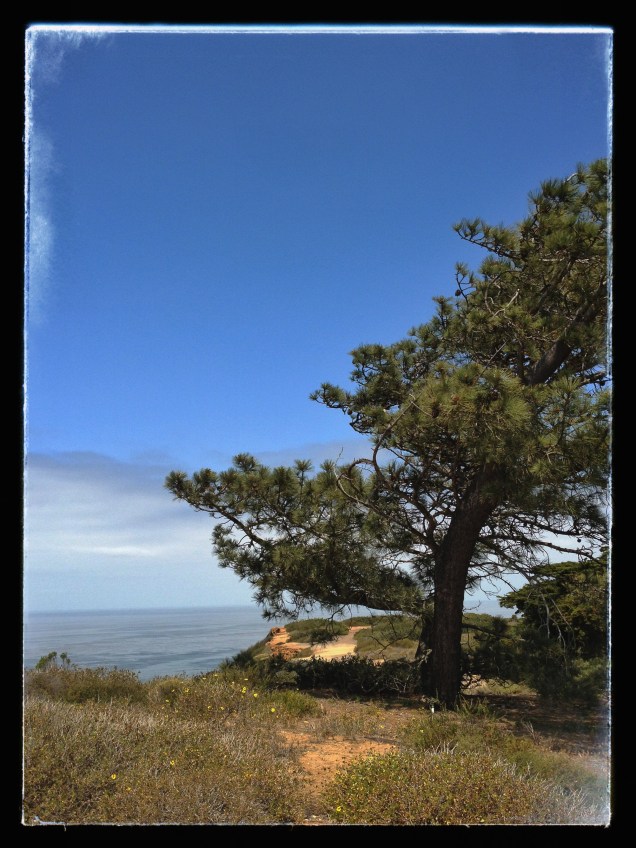
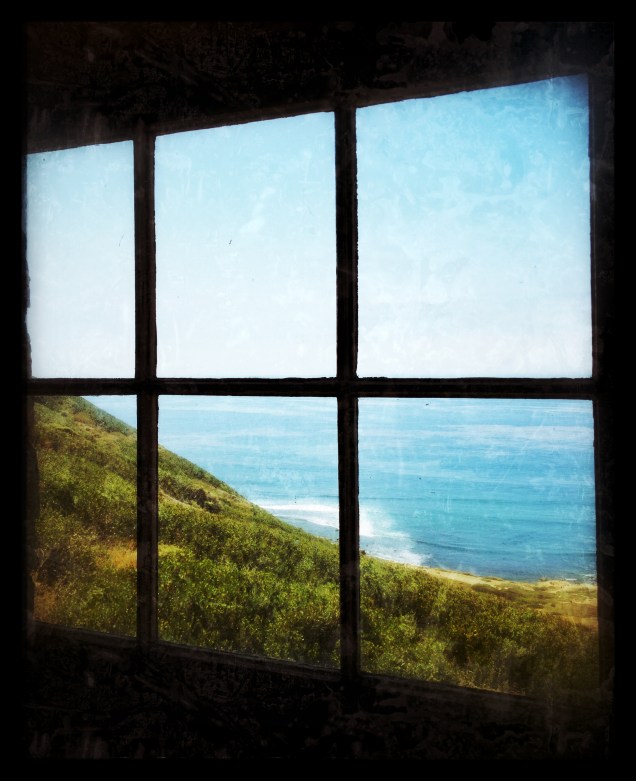
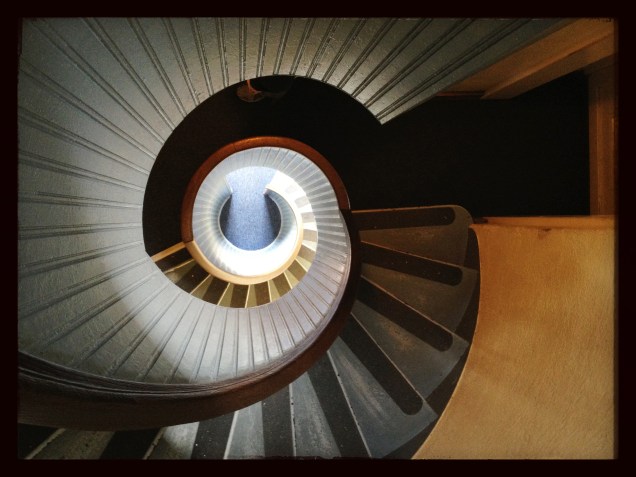
Sun-kissed (Photo: CKirgiss)Wind-blown (Photo: CKirgiss)(bath)room with a view (Photo: CKirgiss)Up the lighthouse (Photo: CKirgiss)Down the lighthouse (Photo: CKirgiss)Ocean grace (Photo: CKirgiss)Walk with me (Photo: CKirgiss)Structured order (Photo: CKirgiss)Constructed disorder (Photo: CKirgiss)Beyond the clouds (Photo: CKirgiss)
Sometimes when we are far from home we see more – not because there is more to see, but because our eyes are more widely open and more clearly focused.
Such far-from-home seeing — if we allow it — helps recalibrate our spirit and soul so that when we are finally home once again (and home is such a very, very sweet place to be) we continue to see widely, clearly, carefully, joyfully.
Our souls may have been blind once, but now they see. And what they see, if they really look for it, is a world filled with faith, hope, love, and beauty beyond compare.
Sometime or other, I picked up a small Book of Psalms for tens of tens of pennies. Maybe at a library sale. Maybe at a thrift store. Maybe at an estate sale. (Since then I’ve learned that it’s important – for my own sake – to document each and every book purchase on the inside front cover. “Bought in May 2006 for $1.00 at a tiny, crowded, musty fusty bookshop in southern Michigan when I was passing through.” That kind of thing.)
I picked up this particular Book of Psalms because
it is leatherbound
it has quirky (some might say elegant) gold-gilt type on the cover
it is of a size and shape and weight that feels just right in my hands
it has an intact binding
it has a personalized fly-leaf noting that Aunt Lil gave it to her nephew Arthur on December 17, 1916
it has a quirky (some might say historical) book stamp on the title page noting that it was once the property of Arlington Street Church, Boston
it boasts 1882 as a publication date (and 1882 books are, as a general rule, good for the soul)
it numbers the individual songs Romanically (which apparently is not a word, but whatever).
That last one is important. There is something mighty and majestic about “Psalm XXVI” as a title that “Psalm 26” lacks. Perhaps that’s why we say “Twenty-Second Winter Olympics,” but we write “XXII Winter Olympics.”
No matter. Whether XXVI or 26, this morning’s Psalm – as is so often the case – is best considered as a series of questions and challenges before starting yet another week of full, rich, real life.
–Have I acted with integrity and trusted the Lord without wavering?
–Have I invited the Lord to truly test the motives of my heart?
–Am I always aware of His unfailing love?
–Have I lived according to His truth?
–Do I resist going along with hypocrites?
–Do I refuse to join in with the wicked?
–Do I enter the glorious presence of God, singing with thanksgiving and telling of His wonders?
–Have I fully embraced God’s redemption and mercy so that I can (undeservedly) stand on solid ground?
–Do I publicly and joyfully praise the Lord?
Of course not. At least not to the extent that I could or should, and certainly not to the extent that He deserves.
But (oh glory!) “of course not” is not a static state of being. Rather, it is the reality from which we launch ourselves anew each and every morning straight into the loving arms of our Creator and Savior, there to be embraced just as we are. For it is only in those arms – the source of all love, forgiveness, strength, and grace – that we have any hope to live a life that can answer “yes” to the questions of Psalm XXVI. After all, it is not just “A Psalm of David” but rather “A Psalm of Us All.”
Sometimes it’s just too early and too soon and too messy to wrestle with all the nuances of David’s lyrics. The Almighty’s intolerance, destruction, and declarations of guilt – are these really the point of this song, or merely reflections of David’s emotional circumstances? Are these things upon which to build a doctrine, or simply the cry of a creative and wounded heart? Are these descriptions that saturate all of the sacred Word, or rather one poet’s attempt to wrap in human language that which is spiritually unknowable?
God’s infinite grace, love, and forgiveness – as demonstrated through creation, incarnation, and resurrection – sweep aside all doubts about His nature.
But still there is this Psalm (and many others) that lie before us – words that must be read, chewed, digested.
On this particular Monday, I find that the verses of Psalm 5 are best considered and consumed when inverted from ancient poetic statements into modernly personal queries. Soul-baring queries. Uncomfortable queries. Convicting queries.
1. Are my prayers intensely honest to the point of groaning?
2. Do I look to God alone for my soul’s help?
3. Do I pray daily with patient expectance?
4. Do I foolishly assume that God overlooks and tolerates my sin?
5. Does my pride keep me from drawing near to God?
6. Am I truthful and honest in all things?
7. Do I enter God’s presence in awe of myself or in awe of him?
8. Do I invite God to lead me on His chosen path?
9. Are my words untruthful, destructive, foul, or falsely flattering?
10. Have I been caught in my own trap of rebellion?
11. Do I love the Lord’s name and take joyful refuge in it?
12. Do I pursue a godly life and rest in His shield of love?
Suddenly Psalm 5 is my Psalm, for these are questions my heart needs to face and my soul needs to answer.
These are questions that bring me to a narrow place of reflection, a focused point of confession, a singular place of desire –
to rely only on God (not the things of this world)
to rely always on God (not just when I am confused and wounded)
to rely wholly on God (not also on myself)
and to rely humbly on God (acknowledging my selfish helplessness and his loving grace).
Welcome to Monday. Welcome to Psalm 5. Welcome to life. Welcome to divine love.
Babies are my grounding point. When I need a visible and tangible reminder of God’s majesty, deity, splendor, creativity, love – even very existence – I find it there: living, breathing, crying, wiggling, squirming, sucking, sleeping, breathtaking babies.
Those fingers. Those toes. Those eyelashes, like spun silken strands in miniature.
That hair. That nose. That skin, like softened velvet robes in space.
Who can comprehend the miracle? Who can fathom the process? Who can understand the astonishing surprise of human life appearing in such a thoroughly helpless yet perfect bundle of being?
And most of all: who can grasp the unimaginable truth that Almighty God, Creator of the universe, would willingly choose such a form for His greatest work of all – the rescue of mankind from itself?
Christ, the living babe. The helpless, living, breathing, crying, wiggling, squirming, sucking, sleeping, breathtaking babe.
The incarnated Word.
God in flesh.
Majesty on earth.
Love embodied.
It boggles the mind (if one really thinks about it). It astounds the senses (if one really absorbs it). It overwhelms the soul (if one really believes it).
Oh my word, what could be more startling? (There is nothing like it.)
Oh my Word, who could be more salvific? (There is no one like You.)
Amen.
[Here is quite certainly the most delightful Christmas pageant ever. I’d be mightily surprised if this video of children-as-sheep, children-as-wisemen, children-as-stars, and children-as-holy-family didn’t make you smile broadly and cry joyfully.]
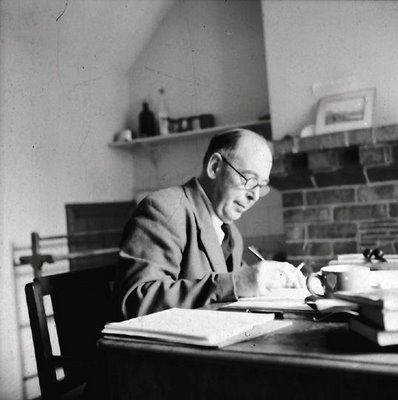
It seems presumptuous to join all the other Lewisians today in celebrating what would have been his 114th birthday.
But I’m going to do it anyway. Perhaps not brilliantly, but oh well – we can’t all be Lewis.
Set aside for the moment that Lewis and Tolkien had a serious falling out, in part because of Lewis’s decision to join the Church of England after his conversion.
And that his writing sometimes echoes faintly of British snobbery.
And that he occasionally leaves you guessing as to what he really thinks and believes about specific doctrinal points (purgatory, for example).
And that Robin McKinley, one of my favorite young adult authors, who recently converted to Christianity, is quite thoroughly allergic to him (as stated here).
And that Hollywood has made a flozzergnashing priddlyshnotz of Narnia (there are no words for it, really).
And that HarperCollins has ignored all textual evidence, literary logic, and scholarly output by INCORRECTLY renumbering the Chronicles of Narnia (which many of us have ranted about in the past for all the reasons outlined here).
And that Tolkien pooh-poohed his Chronicles in part because they included Father Christmas.
And that many of his colleagues felt he’d sold out to the world of commoners via the BBC and popular publishers (or maybe it was just jealousy).
And that sometimes you have to read his sentences several times over to really digest all of the truth and logic and brilliance packed into them.
And that his literary scholarship can sometimes make current literary scholars feel incompetent.
And that he often leaves readers hanging with, “In a book I read one time – I can’t remember which one…” (the price of possessing a searchable-PDF-high-quality-flatscanner-like memory).
And that he smoked (this one really gets some people).
And drank (now I’ve really done it).
Set it all aside because it doesn’t matter; the fact remains – C. S. Lewis was a brilliant writer. Since his writings are all I personally have of him, they are all I can speak to.
And they are indeed brilliant. Delightful. Unexpected. Rich. Deep. Profound. Playful. Reflective. And so many other things.
The Lewis Society to which I belong does, on occasion, genuflect a bit more than necessary. And a friend of mine sometimes jokes that I adhere to the doctrine of the Quadrinity. But I recognize my sometimes excessive adoration of Lewis for what it really is – sincere admiration (with a dash of awe) for a man who wielded language like a warrior’s sword, waved words like a magician’s wand, and rang truth like a chorister’s bell.
He did this as an expert of literary scholarship.
He did this as a devout believer of Jesus Christ.
I am glad to know him, even if just through his books. Those are more than enough.
________________
[Lewis is so very much more than his Chronicles; even so, many readers only know him as the man who created Narnia. And so here are some of the best lines from that land where we all want to be.]
“Then he isn’t safe” said Lucy. “Safe?” said Mr. Beaver; “don’t you hear what Mrs. Beaver tells you? Who said anything about safe? ‘Course he isn’t safe. But he’s good. He’s the King, I tell you.” –The Lion, the Witch and the Wardrobe
“Aslan,” said Lucy, “you’re bigger.” “That is because you are older, little one,” answered he. “Not because you are?” “I am not. But every year you grow, you will find me bigger.” –Prince Caspian
“If they’ve said it once, they’ve said it a thousand times. ‘Puddleglum,’ they’ve said, ‘you’re altogether too full of bobance and bounce and high spirits. You’ve got to learn that life isn’t all fricasseed frogs and eel pie.” –The Silver Chair
“My own plans are made. While I can, I sail east in the Dawn Treader. When she fails me, I paddle east in my coracle. When she sinks, I shall swim east with my four paws. And when I can swim no longer, if I have not reached Aslan’s country, or shot over the edge of the world in some vast cataract, I shall sink with my nose to the sunrise.” –The Voyage of the Dawn Treader
“Was it all a dream?” wondered Shasta. But it couldn’t have been a dream for there in the grass before him he saw the deep, large print of the Lion’s front right paw. It took one’s breath away to think of the weight that could make a footprint like that. –The Horse and His Boy
Then there came a swift flash like fire either from the sky or from the Lion itself, and every drop of blood tingled in the children’s bodies, and the deepest, wildest voice they had ever heard was saying: “Narnia, Narnia, Narnia, awake. Love. Think. Speak. Be walking trees. Be talking beasts. Be divine waters.” –The Magician’s Nephew
“Come further up, come further in!” –The Last Battle
______
Okay, just one more, from Out of the Silent Planet, basically summing up the entire doctrine of the fall and our subsequent need for Christ’s redemptive work on the cross:
They were astonished at what he had to tell them of human history – …
“It is because they have no Oyarsa,” said one of the pupils.
“It is because every one of them wants to be a little Oyarsa himself,” said Augray.
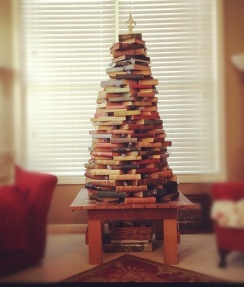
I love my book tree just as much unlit by day as lit by night. It’s gracious like that.
Like all beautiful and bookish things, there’s more to this book tree than just a tapered stack of tomes. There is truth. Loads of it. Mostly about the Church and her people.
Lesson 1: If one book falls, they all fall. (Really – is it too obvious to state?)
Lesson 2: Each book brings something unique to the tree – colors, textures, topics, covers, authors, views, titles. The variety is astonishing.
Lesson 3: The tree is made entirely of books that were either destined for the trash pile or stacked in a junk shop before being rescued, bought for a price, carried home, and given new life.
Lesson 4: Some of the books have divergent views on such things as history, humanity, and society, but they all agree to play together nicely and be part of this particular tree.
Lesson 5: Together, these books make something bigger, better, and more beautiful than they do alone.
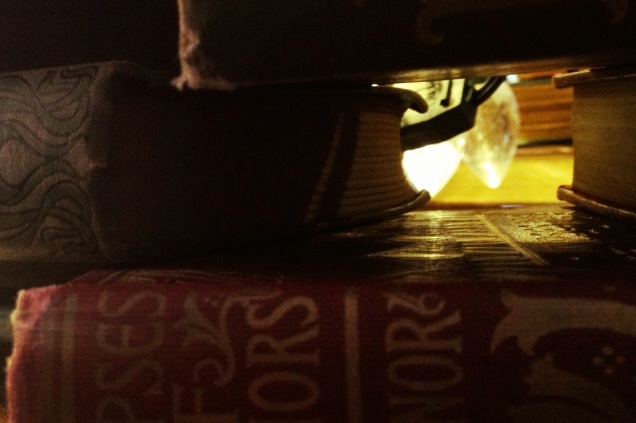
Lesson 6: Even the smallest amount of book tree light pierces the surrounding darkness.
Photo: CKirgiss
Lesson 7: The inner book tree lights radiate the space within, then spill out the cracks, tumble over the pages, and radiate the space without.
Photo: CKirgiss Inner light, outer glow
Lesson 8: The seemingly ordinary books are quite as necessary as the fancifully decorated books.
Photo: CKirgiss (extra)ordinary
Lesson 9: The tree stands tall and true only because it is built on a foundation that is strong and level (and also happens to be made out of an old shed door decorated in crayon by the neighbor girl).
Photo: CKirgiss On this table I will build my tree.
Lesson 10: The tree brings me joy. Great, great joy.
So should the Church. And so can the Church. But often she does not because (sometimes) each of her books determines to write its own story, construct its own foundation, and be its own individual tree.
And yet the Lord loves her (and her books) still. Glory be, that is Good News indeed.
[Just one more thing…]
My particular book tree has its own peculiar mix of doctrines that I discovered only after constructing it. (NOTE: The views of my tree do not necessarily reflect the views of this blog or its author.)
My book tree:
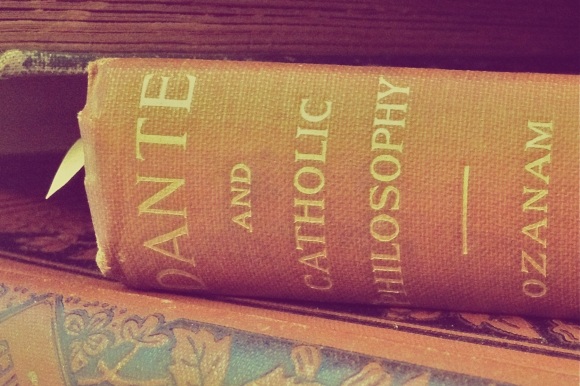
is ecumenical
Photo: CKirgiss Dante and Catholic Philosophy
embraces teaching that is both didactic and narrative
Photo: CKirgiss Pinocchio and English-French Dictionary
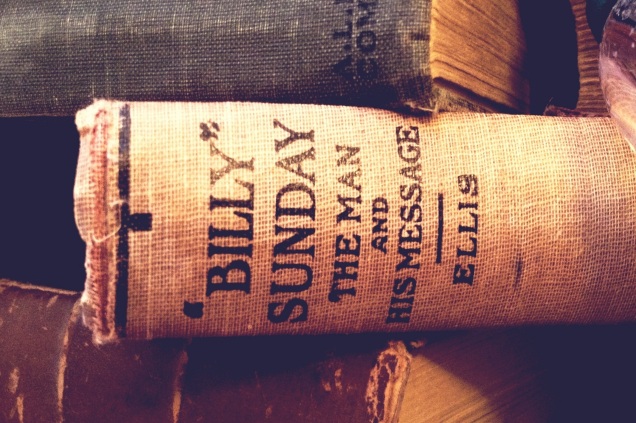
is evangelistic
Photo: CKirgiss Billy Sunday
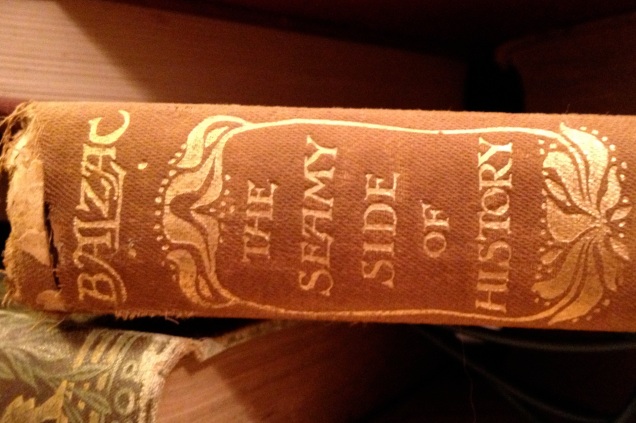
wallows gleefully in human depravity
Photo: CKirgiss The Seamy Side of History
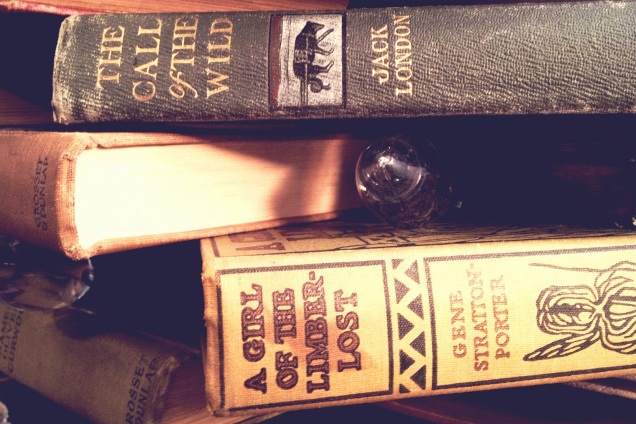
is egalitarian – or maybe complementarian?
Photo: CKirgiss Call of the Wild and A Girl of the Limberlost
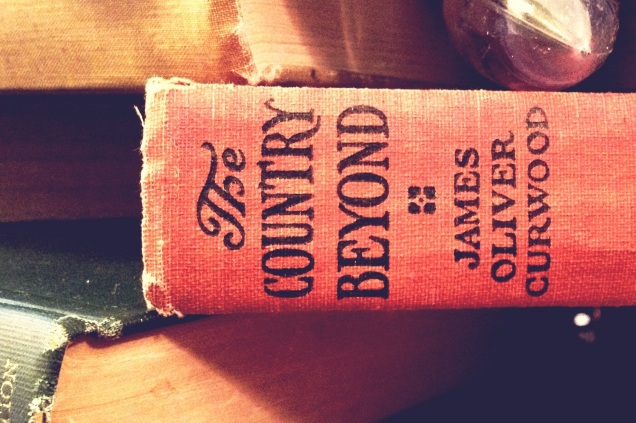
is confidently heaven-bound
Photo: CKirgiss The Country Beyond
warns against backsliding
Photo: CKirgiss The Danger Trail
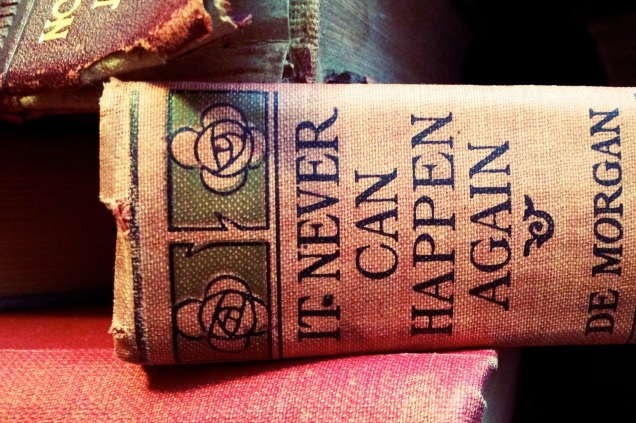
deals with behavior lapses simply and swiftly (and – let’s hope – privately)
Confession: I own too many books. Not just a few too many, or some too many. A lot too many.
Someone keeps saying it’s a problem.
I keep not listening.
So when I got an email today from one of my literature students with “book tree” in the subject line, I was intrigued. I thought it might be some kind of narrative thematic diagram resembling a family tree, which would be pretty cool.
But it wasn’t.
It was an idea. For a book tree. (Go figure.) Made out of books. To look like a tree. You know, for Christmas and all.
Which was so much cooler than cool I can’t even put it into words.
This email, and the resulting fervor it whipped up in my soul, is precisely why I don’t Pin. I would forfeit my life to this and that and such-and-such and so-and-so and ladeedahdeedoo and pretty soon I would be a crazy person who only converses with glue sticks and rotary cutters.
Truly.
Proof positive is that I spent several hours tonight constructing this:
Photo: CKirgiss “The Word became flesh.”
It was a lot more work than I expected. The light schematic is pathetic. In a few places, I had to jerryrig shims of folded paper to keep things level. I didn’t know how to finish it off. I made a mess of my bookshelves.
But oh my, I am delighted. Beyond words. Because not only do I love my books (too much, says someone) but I love the season that my new book tree celebrates. The incarnation. The Birth of Christ. The eucatastrophe of mankind’s history (for all you Tolkien fans).
Breathtaking indeed. Beyond words.
The Word became flesh and made his dwelling among us. We have seen his glory, the glory of the One and Only, who came from the Father, full of grace and truth. (John 1:14)















 Breathe