a bigger picture – a better question

Wednesday, 7 November, 2012:

I’m not a political activist, pundit, or powerhouse. That’s why after voting yesterday, I wrote that the precious freedom to vote is of less significance than the precious truth that we are human.

This morning, 51.5% of voters are euphoric (to varying degrees) and 48.5% are despondent (on various levels) based solely on their personal answer to this single question:

Who did you vote for?

Several hours ago, the political map of our country looked like this:

2012 Electoral Map – 11.07.12

For entirely non-political reasons, I hate this map. Everything about it screams division and dissent. The non-United States of America.

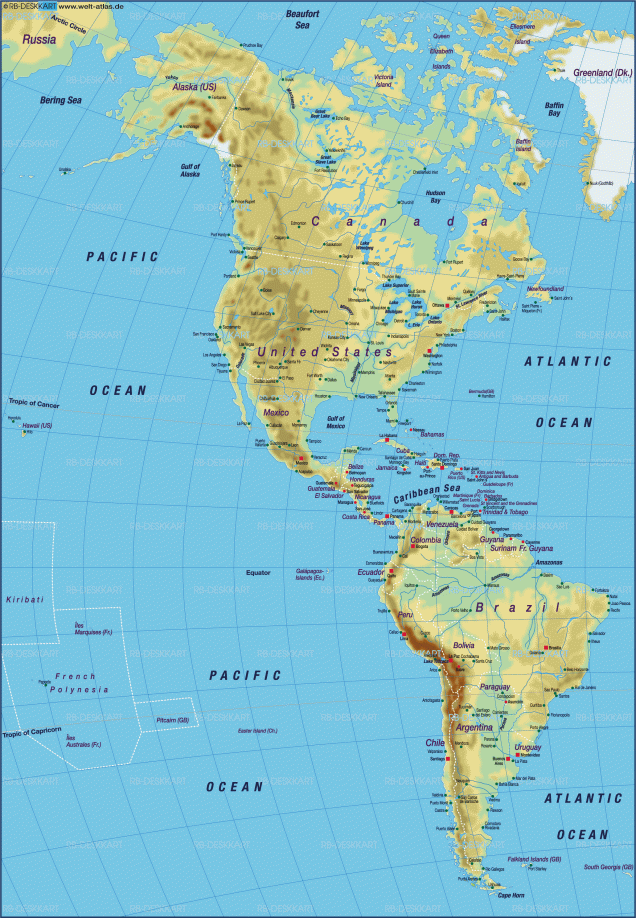
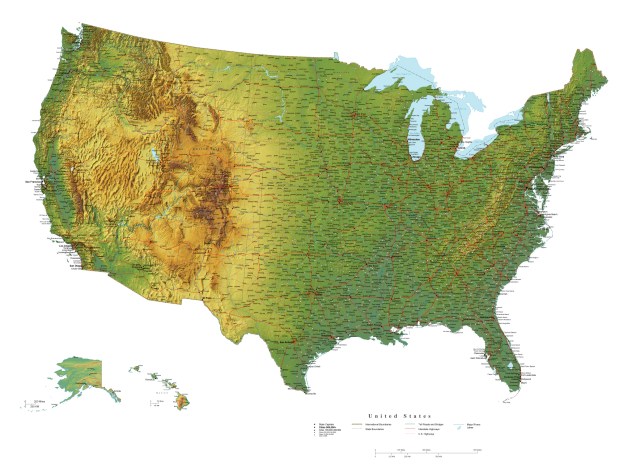
I prefer this map:

United States

A person has to really scrunch up their eyes to pinpoint “my” place. The color scheme has an artistic air about it. The division lines are faint, more like the marks on a master blueprint than the “cut” lines on a butcher diagram.

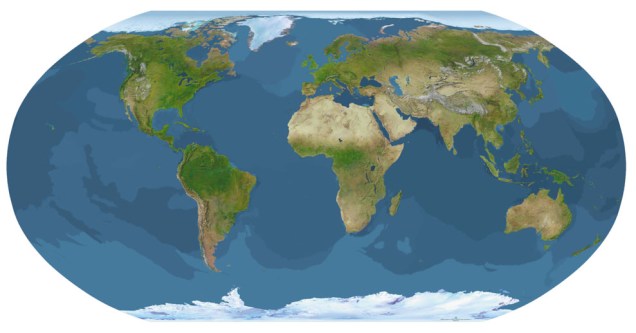
This map is even better:

This one is better yet:

And this is the best of all:


I vote because I can. Because I have been given that right.  Because voting matters – on a temporal level, that is.

But I am not a pinpoint on a blue/red electoral map, defined primarily by my political leanings or judged by my voting record.

I am, rather, a pinpoint in a vast, immeasurable universe. I breathe because I live. I have been granted that miracle. Pinpoints matter – in spite of their smallness – solely because they are defined by their imago Dei and judged by undeserved grace.

The real question (for today) is not Who did you vote for?

The real question (for beyond days) is Who do you live for?

Knowing and Known

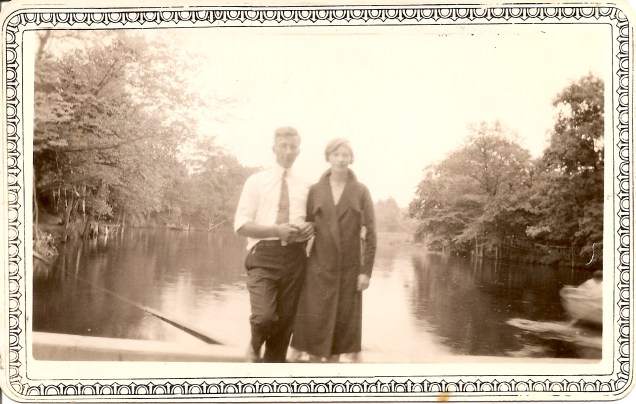
Photo: CKirgiss (Otto and Alice Jacobsen)

Eighty years ago yesterday, my Norwegian immigrant grandparents were wed in Orange, New Jersey – separated from their parents by both an ocean’s roaring expanse and a generation’s widening gap.

My bestefar died when I was only seven, my bestemor when I was eight. That was a long time ago. So long that I don’t remember much about them. Hardly anything at all, in fact. What I do remember certainly doesn’t look anything like the picture above.

Grandparents have a certain something that identifies them from a distance. A look. A gait. A tip of the head. A style. An air. It has little to do with age in some cases, and much to do with wisdom in most cases.

The people in this picture are not my grandparents. They are strangers to me. I don’t recognize their youth. Their style. Their poise. Their intimacy that is so mysteriously visible it makes my heart ache. With joy. With sadness.

Who are these people?

I want to meet them. To hear their story. To ask them questions. To know who they were before they became my grandparents, before they were the quiet man who carefully peeled his boiled potatoes and the kindly woman who gently cared for the quiet man.

The years make little sense. Youth. Age. Past. Future. Then. Now. Was. Is. Here. Gone.

It all starts to jumble together after awhile. We wake up one day and realize that we are no longer grandchildren (but will always feel like we are), that our own children have grown (how did this happen?), and that with each breath, we move ever-so-slightly closer to becoming someone’s memory, whether in fact or photograph. (Yes – the seasons of the year often mirror the seasons of my soul.)

This would all be desperately heartbreaking if not for the promise of new life and new breath that waits for us not just on the other side of this world but in the here-and-now. The sadness of my grandparents’ deaths does not define my soul. The weight of my own mortality does not measure my existence. The reality of all life’s fragility does not color my faith.

Rather, it fills me with wonder. With awe. With expectant pause. Because though I will never really know the people in this picture (and oh, I would so very much like to know them), the Almighty Creator knows me.

I. Am. Known.

And that is enough.

A tale of death and life

Photo: CKirgiss
2012 Apple Popcorn Festival, Brookston, IN.

A few weeks ago, I saw these pumpkins while walking small-town streets during a small-town festival.

And I rejoiced because I love everything about this time of year. The crisp air. The changing leaves. The crunchy earth.

The impending death.

Weird, I know.

Most discussions about being, whether humanistic or religious, are framed by the precisely ordered phrase “life and death” for good reason. The one so obviously follows the other.

Except when it doesn’t.

Coming as it does between summer (the season of life) and winter (the season of death), autumn treads in both worlds, displaying a bold embrace both of that which is flourishing and that which is dying. In these early days of autumn, the dying can be beautiful to behold – shocking red that is so rich I can (almost) smell it, feel it, taste it. And on the same branch, a green so deep I can (almost) hear it breathing, singing, growing.

Photo: CKirgiss
October leaves of Indiana.

We tend to view autumn as the season following life (summer) and leading into death (winter). And we tend to view that transition from life to death as a completed cycle, the final stage, the end of something.

Except when it’s not.

Because of course, winter is not the end. Spring follows on its heels, each and every year without fail, leading into summer’s riotous burst of life.

I love autumn for all the reasons listed above, and like all other autumn lovers, I’m thrilled to be wearing sweaters, eating soup, and wrapping myself in wool blankets again. But I’ve learned that my autumn-love is about so much more than that.

It’s about celebrating “death and life” in that precise order. My redeemed but still-sorry soul is so desperately in need of death – pruning, refining, purifying, cleansing – so that life can flourish in its place.

Autumn helps remind me of this, helps settle my soul into a place of spiritual expectancy in preparation for the much-needed, oft-repeated, sanctifying process of dying to self so that I can live for Christ. Such death is not the enemy, not to be feared, not to be avoided, and certainly not to be mocked. Such death is miraculous, renewing, and breath-taking. Such death is a gift, really, an invitation from Jesus himself to enter the re-creation story of my own spirit that he began on the cross.

I need to die. I really do. In so many ways. How unspeakably wondrous that such death is really a birth, which is a paradox typical of life with Jesus Christ.

And how even more unspeakably wondrous that nature’s season of death, stretched across the long, dark winter months, is momentarily pierced with the greatest Birth of all. Such is the grace of God that though life leads to death, death also leads to life. Over and over and over again.

Eleven years later…

I wrote these words 11 years ago, but could have written them yesterday – not just about the events of that day, but about all of life when it is lived outside of God’s immeasurable, forgiving, majestic, jealous love. (Please silence your outcry for that last element. God’s jealousy is not humanly petty. It is gloriously divine. It is for us…all of us, and nothing could be more breathtakingly astounding) .

______

Regarding September 11…
I have a thousand questions I want answered.
I have a thousand fears I want quelled.
I have a thousand thoughts I want sorted out.
I have a thousand concerns I want soothed.
I have a thousand things I want changed.
I have a thousand people I want saved.
I have a thousand places I want seen.
I have a thousand songs I want sung.
I have a thousand steps I want walked.
I have a thousand prayers I want uttered.
I have a thousand bridges I want crossed.
I have a thousand roads I want traveled.
I have a thousand books I want read.
I have a thousand poems I want whispered.
I have a thousand birds I want freed.
I have a thousand trees I want honored.
I have a thousand skies I want admired.
I have a thousand oceans I want remembered.
I have a thousand eyes I want dried.
I have a thousand ears I want opened.
I have a thousand voices I want heard.
I have a thousand wrongs I want forgiven.
I have a thousand mountains I want climbed.
I have a thousand stars I want named.
I have a thousand lives I want lived.
I have a thousand fields I want sown.
I have a thousand rivers I want blessed.
I have a thousand children I want born.
I have a thousand sorrows I want healed.
I have a thousand days I want begun.
I have a thousand years I want danced.
I have a thousand clouds I want explored.

But I have only one God, who is true from the highest depths to the lowest valleys, from the farthest east to the farthest west, and from the beginning of always to the end of never.

The god for whom people were willing to die last Tuesday is no god at all.

The true God does not say, “Die for me.” He says, “I’ve died for you.”

The true God does not say, “Hate others.” He says, “Love others…as much as you love yourself.”

The true God does not say, “Crucify the enemy.” He says, “Crucify your heart so I can create in you a new one.”

Would that the entire world could live in the contented peace of such simple truth as this.

copyright 2001 Crystal Kirgiss

From empty to full

Photo: CKirgiss

The bottom basket of my freezer is bare. Nothing in it. Nothing at all.

This is a problem because that basket is supposed to be full of frozen overripe brown bananas.

Bananas that – when thawed – can practically be poured out of their peel.

(Bananas that – when frozen – can break a toe if dropped on it.)

Bananas that are absolutely perfect for baking projects.

Bananas that yield domestic gold.

Bananas that ooze culinary delight.

Bananas that are THE single most important ingredient in banana bread, of which I must bake three loaves every Wednesday night for a very particular and discerning crowd.

It’s Wednesday.

I have no overripe brown bananas.

None. At. All.

And the twelves pounds of partly-green-mostly-yellow-with-barely-a-hint-of-brown bananas that I just scrounged during a desperation run to the grocery store won’t be transformed into genuine baking gold for another week. At least.

This is just the kind of crisis that threatens to destroy my immediate existence for reasons that aren’t entirely clear. Or rational.

Bottom line: I should have been better prepared. I should have checked the bottom basket of my freezer last week, bought twelve pounds of partly-green-mostly-yellow-with-barely-a-hint-of-brown bananas then, and had plenty of frozen overripe brown bananas now. But I didn’t. And so I don’t.

In a world that can beam data signals halfway across the world in a millisecond, you’d think there’d be a way to fix this. A way to make these bananas ripen quickly. A way to turn at least a small part of this depressing morass of partly-green-mostly-yellow-with-barely-a-hint-of-brown into a lovely pile of mushy-smooshy-runny-oozy-deep-dark-brownness now. Right now. This minute. Immediately.

Huh. How ironic. My little bananas crisis (little, indeed) and the resulting sense of despair and doom and frustration and irritation isn’t really about bananas at all.

It’s about my response to human limitations. To the fact that the world is not mine to orchestrate. To the fact that I cannot control most of what happens around me. To the fact that I am, after all, a created being existing in a created world that – for all of our human advancement and innovation and progress – is not under my authority.

I am only human. Miraculous and beloved and blessed, to be sure, but fully – only – human nonetheless.

The divine does not inherently exist within me. Enlightenment and perfection are not merely a matter of tapping into my own inner reserves of power and strength and wisdom. (Left to itself, my inner reserves are desperately wicked and include nothing of value or merit or worth.)

But…

beyond all reason and comprehension

the Divine does graciously dwell within me. Salvation and redemption are freely offered, poured out at the cross and filling my soul so that I can learn love and humility and obedience. (Left to itself, my soul is filled with my own self which knows nothing of love or humility or obedience.)

The bottom freezer of my basket is empty.

But my soul is full. Oh my …. very full indeed.

Psalm 23 re:mix

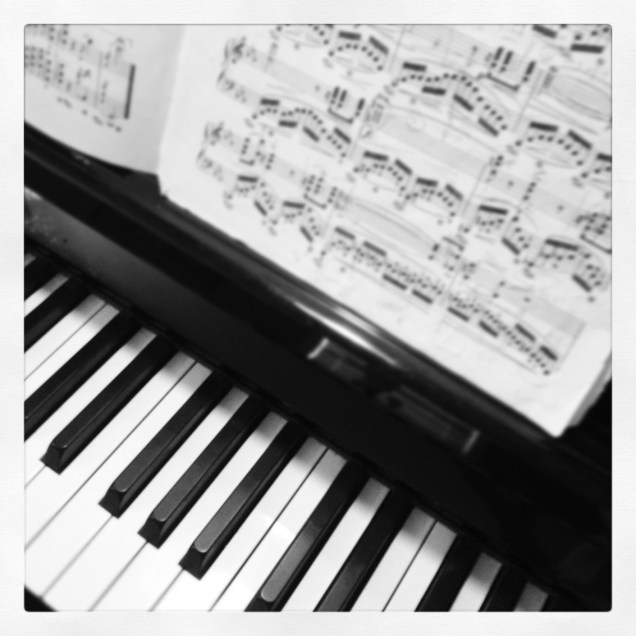
I know nothing of sheep (Psalm 23) or vineyards (John 15), but much about music lessons. I believe the heart of God is revealed just as beautifully in the best attributes of a piano teacher (and so many other roles) as in those of a shepherd or farmer.

The LORD is my piano teacher, I have nothing to fear.

He starts me on the easiest songs so I can make true and simple music even as a beginner.

He teaches me my scales (I hate them, I do!) so my fingers know when to cross and tuck, over and under, and I will be ready for the difficult music that lies ahead.

When I stumble and cry because the music is hard (but I practiced! so much and so long!) he comforts me, then breaks it into smaller pieces that I can work on little by little, one by one, over and over and over again. He never ever tells me I am hopeless, untalented, and a waste of his time (like some other teachers do). But neither does he stop challenging me, stretching me, and molding me into a real musician. (Truly, it would be much less work for him if he didn’t care so much about my progress, if he just let me twiddle around in Book I, playing what I already know, never moving beyond 4/4 time signatures in the Key of C.)

When I stumble and err because I did not practice (but I was busy! so very, very busy!) he patiently waits while I mumble my excuses, then helps me get back to work so I can someday make a joyful noise. He never, ever slaps or slams the piano lid on my fingers (like some other teachers do). But neither does he look the other way, pretend all is well, and say “well, well, you are truly wondrous” just so I will feel happy. (Indeed, it would be much less work for him if he didn’t care so much about his students, if he just enrolled them methodically, lectured them dispassionately, listened to them unaffectedly, deposited their monthly tuition checks promptly, and called it even.)

When I play well – and it does happen now and then, miraculously, only because of all he’s taught me – he doesn’t offer cheap, worthless prizes (oh joy…another plastic bust of Liszt) but instead gives me new, more beautiful, more exciting, and more difficult songs to learn.

He is not content that I simply be a piano player. Instead, he molds me into a musician who loves music from deep inside my heart, makes music from deep inside my soul, and hears music from deep inside my being.

Sing! Shout! Make a joyful noise! The LORD does wondrous things for even such as I!

Thirsty dirt

The earth is thirsty. Cracked across her skin. Parched to her roots.

And we are all crying out for rain. Oh please, God, rain. We need it so badly. (And the crying out becomes complaining and cursing and fists shaking in rage and disbelief.)

But when we do have rain – when things are green and sated and as they should be (indeed . . . so that over time water really does turn into wine) we simply roll along, taking in the miracles that lie before and behind and above and around us.

On May 6, the earth was sufficiently watered (in Indiana, at least) – and in her subtle, surprising way, she was slowly slipping out from under a heavy, dull brown blanket, worn for many months, into a light, fresh green shift (n.a loosely fitting dress that hangs straight from the shoulder; a chemise) that shimmered when it caught the light.
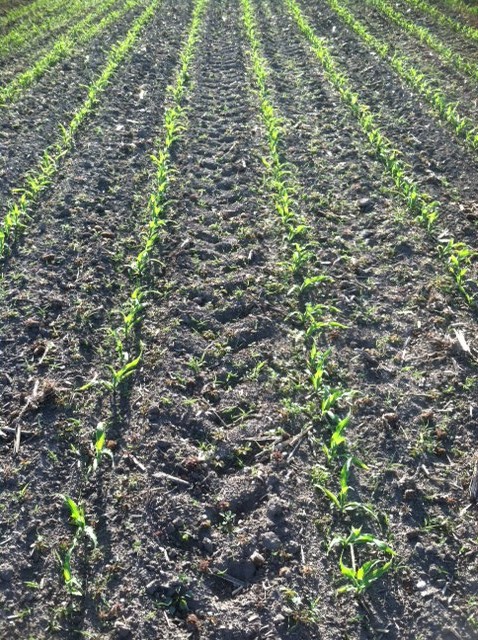
I saw this from a motorcycle, which is sometimes the perfect place for noticing the mundane things that lie to the left and right – for seeing the unexpected way the earth rises and falls, lilts and skips – for seeing the flashing, blinking field rows that fly past – for seeing the unnoticed world that surrounds us – for seeing, well, all kinds of things that one doesn’t normally see.

I wrote this at the time:

Spring Fields

A gently whispered green
tints the earth
and teases the eye
here then gone
seen then not –

a silent ode to human hands
that ever and again
work the land
with patient care –
a soaring anthem to Divine Mystery
where ever and again
broken seeds become bread
and broken bread becomes grace
to any who would take and eat.

CK 05.06.12

I mused, detangled, listened, and reshaped until the rhythm, flow, and words were finished, complete, and just so.

I wrote. I posted. I breathed deeply and (admittedly) felt a certain sense of self-satisfaction at having found something to say and then a way to say it. In a very small way, I had created, and as Dorothy Sayers would point out, that is perhaps one of the most important ways in which humanity images the Creator.

Good for me.

I wrote. I created. I imaged the Creator. And yes, I experienced awe, amazement, and gratitude for the creation God placed in our hands.

What didn’t I do? I didn’t – not even once – stop and specifically thank God for the rain that made the mysterious “whispered green” possible. For the rain that miraculously turns dead seeds into living plants – living plants into fruit and grain – fruit and grain into food and sustenance.

Experiencing gratitude (which I did) is not quite the same thing as giving thanks (which I did not). The one is passive. The other is active. The one receives. The other gives. The one is experienced. The other is enacted.

I do not for one second espouse to some (crack) theology that equates my lack of giving thanks with the current lack of rain. The lack of rain is what it is – a lack of rain. It’s happened before. It will happen again. As I understand Genesis, the earth reaped her own set of unsought consequences from humanity’s fall.

But I do espouse to a faith that can challenge, transform, and grow a person no matter how long they have known God or followed Jesus.

So:I want to live a life defined by thanks rather than complaints – contentment rather than curses – peace rather than unrest. Perhaps a very manifest dry spell in the weather can help reroute a very obscure dry spell of the soul.

Me, myself, and more me

Monday – and I am mightily irritated because:

My refrigerator crisper froze my bag of fresh spinach.

My over-the-kitchen-island light fixture needs to be dusted.

My bathroom shower tiles are dingy plus a hint of soap-scummy.

My central-air compressor won’t push the cold air to the upstairs bedrooms.

My front-load washing machine has some mildew on the rubber door gasket.

My grocery store stopped carrying my favorite brand of snack crackers.

My all-in-one printer – scanner – copier is out of ink…again.

My iPod refuses to correctly sort my three favorite albums.

My dishwasher left gritty residue on the steak knives.

My car has a funny rattle under the front dash.

And my gas grill has a jiggly handle.

Really. It’s enough to make any reasonable (read: self-important) 21st-century woman throw up her hands in disgust, mutter unspeakables under her breath, and call it quits. Quite. Who, after all, can be expected to function under these desperate conditions?

Hmmph.

[And now I will square off with myself and do battle with the ‘I’ that looms largely, always ready to rear her haughty head and claim her full share of centrality. I know her well and don’t think much of her. That Jesus willingly died for her is really quite astounding.]

[In Madeleine L’Engle’s A Ring of Endless Light, Vicky Austin reads these lines by the poet Thomas Browne:*

If thou could’st empty all thyself of self,
Like to a shell dishabited,
Then might He find thee on the ocean shelf,
And say, “This is not dead,”
And fill thee with Himself instead.

But thou art all replete with very thou
And hast such shrewd activity,
That when He comes He says, “This is enow
Unto itself – ’twere better let it be,
It is so small and full, there is no room for me.”

Indeed.]

[*For all you L’Engle fans, there’s been a bit of rumbling about the authorship of this poem. L’Engle clearly attributes it to a Sir Thomas Browne who lived “at least three centuries ago” which would be the Sir Thomas Browne who wrote, among other things, Religio Medici. But in fact the poem’s author is T.E. Browne, a 19th century educator, theologian, and poet. You can read more about the mix-up here and can read the poem, titled “Indwelling,” here on page 82. Just in case you were wondering.]