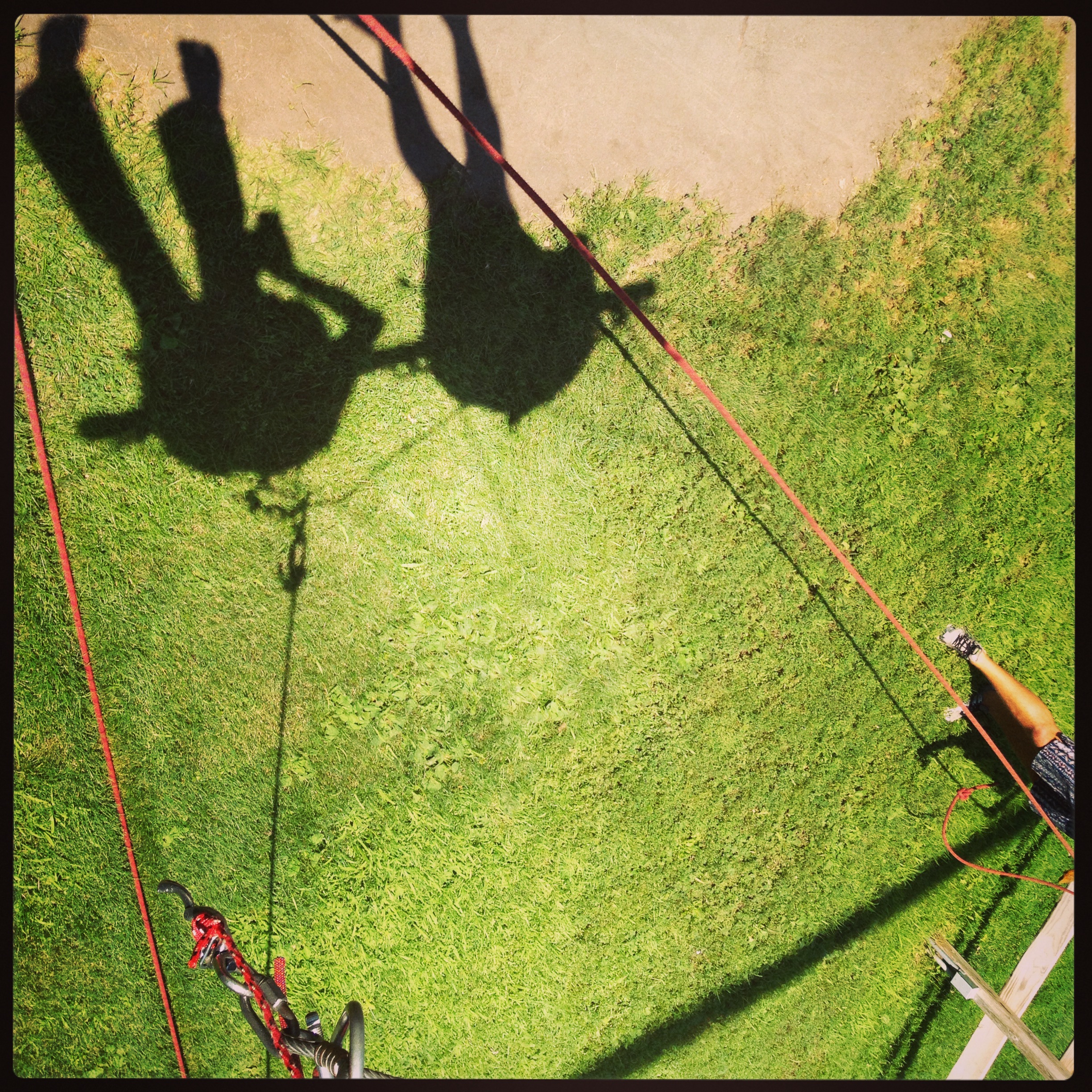
Inside, outside, upside down: what life sometimes looks like from here

Aerial view (Photo: CKirgiss)

The past few years have been a bit, well, giant-swing-ish.

One main reason: I went back to school for a PhD, on a whim, which doesn’t qualify as even a Really Silly Reason.

Balancing academic life and ministry life has been like riding two different giant swings . . . at the same time…which might explain all the stomach lurches, head rushes, and recurrent bouts of low-grade nausea that often accompany such two-giant-swing seasons of life.

When I rode a real giant swing at camp last week, I videotaped and photographed the whole thing, on a whim, which doesn’t qualify as even a Really Ridiculous Reason. Camera phones are expensive. Giant swings are, well, giant swings. Meant to be experienced. Meant to be exhilarating. Meant to be enjoyed.

In order to videotape and photograph the ride, I had to keep my eyes on the screen. Carefully. While clutching my phone. Tightly. While swinging. Wildly.

In a very small and massively metaphorical way, it was a lot like life – not just my life of the past 10 years but, I suspect, many people’s lives at their most regular.

I missed much of the ride’s wild joy because I was concentrating on filming it. I missed many of the best photos because I was sailing through the air too fast to think or focus.

I got maybe one good picture. One. Plus a nauseous-ish headache because I failed to keep my eyes fixed on the horizon.

There is much blathery blather out there about “being grounded” and “living a balanced life” and “centering yourself,” most of which require a person to ditch life’s various wild rides and creative expressions entirely.

Much better to joyfully ride whatever giant swings may come our way, being sure to fully enjoy them by keeping our eyes on the breathtaking surroundings.

Much better to live a rhythmic life that is sometimes slow, sometimes fast, sometimes wild, sometimes calm, being sure to express it creatively in our realities and our relationships.

Much better to center Jesus – not just center on him but actually center him – which equates to also immersing, surrounding, and filling ourselves with Him.

Life is rarely predictable, balanced, or safe. That was never the intent nor the promise.

Instead, life is sweet (even when sorrowful), exhilarating (even when difficult), and full (even when unknown).

Or at least it should be.


A sacred silent space

Sweet Silence Sweet Silence Sweet Silence ***

In case you haven’t noticed (how could you not?) the world is fast, full, loud, chaotic. The chances to sit alone in contemplative silence are few and far between – that is if they exist at all. A dialed-in life (something we are all so good at) easily becomes a tuned-out life (something we all claim to abhor).

I’m spending the week with 350 teens who for 7 days (that is 168 hours; 10,080 minutes; 604,800 seconds) have no phones, no iPods, no computers, no tablets.

They are entirely un-plugged with the hope they can find their way to being completely tuned-in.

It’s a brand new phenomenon for many, one that is difficult at first but is also perhaps the sweetest gift they will receive this week: the chance to be free from all the things that keep them not just connected but also bound to the world around them.

But even better and sweeter than being unplugged for a full week is being solitary and silent for just 15 minutes – a mere sliver of time, a momentary blink of life, a single breath of being.

Silent.

Alone.

(But not really alone – rather more with and within and beside and around than perhaps ever before.)

In such a sweetly sacred space it becomes possible to think freely, breathe deeply, and love fully while in the presence of the mighty and gentle Creator.

We all desperately need such sacred spaces and moments, regularly nestled amidst the bustle and frenzy of life as we know it. The question is not so much how and when those sacredly spacious moments might perhaps happen (for might is as good as won’t) but rather how we will repattern our lives in such a way that those sacredly spacious moments must and will happen.

Our very lives depend on it.

*** Fifteen minutes of sacred silence on the lawn at Castaway Club. At right are a Capernaum camper and her leader/buddy/friend – perhaps the most beautiful image of sacred silence a person could ever hope to witness.

Pits Aisle – a bustling sacred space

In the kitchen of a 17th-century monastery where he was assigned to work, Brother Lawrence discovered how to experience solace and contentment and joy, day after day after day.

But only after many days of unrest and discontent and unhappiness. After all, dirty dishes are not the stuff of prestige and power.

But over time, he grew into a richly deep faith – while surrounded by pots and pans and dishes – wherein he did his “common business” wholly and only for the love of God.

If only we could all live like that. If only we could all be contentedly joyful, whether in a 17th-century monastery kitchen or a 21st-century camp kitchen where the task of washing up after 500 people happens three times a day, each day, every day, day after day after day.

That’s a lot of knives, forks, and spoons. That’s a lot of serving platters. That’s a lot of pots and pans. That’s a lot of bacon grease.

Even so, there are a lot of smiles coming out of Pits Aisle (which, with all its back-and-forth traffic is more like an alley or lane), all day, every day, day after day after day, where the dishwashing crew (aka the Pits Crew) works in a narrow space under heavy heat and high expectations.

Pits AlleyPits AlleyPits Alley

These teenagers gave up a month of their summer, with no pay, so that they could wash dishes. And pots. And pans. And more. For a thousand or so people who will never know their names or sing their praises.

And why? Because the job has to get done. Because Jesus lets us be his hands and feet. Because the common business of life is the soil of faithful living and humble service.

More simply:

  • Because they want to. (True story.)
  • Because they can. (Awesome privilege.)
  • Because they follow a loving Lord. (Wild journey.)

What other reason do they need? What other reason do we?

Dancing with angels

Whether it’s the Trinitarian dance of Father, Son, and Holy Spirit, the Great Snow Dance of fauns and dryads and dwarfs, or the celebratory angel dance at creation,* dancing is a Very Big Deal in the world of faith and love and hope and joy.

I wish I could dance. Not just shake myself around, or slide my feet, or wave my arms, but really truly dance. The kind of dance that makes music. The kind of dance that moves mountains. The kind of dance that reflects God’s creative soul.

But I can’t. Maybe I’m too dull. Maybe I’m too afraid. Maybe I’m too self-aware.

Hannah and Kelsey, on the other hand, can dance. And by dance I mean Really Truly Dance. Without fear. Without worry. Without anything holding them back from joy and love and life and freedom.

Please meet Hannah and Kelsey. Tonight I watched them dance. On the beach. (We’re at camp, you see, and so of course after a long day of games and rides and meals and music and play and energy, well, we had a sunset party at the beach because, um, we’re at camp.)

I wish everyone could have watched them really truly dance on the beach because it pretty much reassured me that there is still hope for the world. Serious, awesome, deep, rich, genuine, lasting, true hope. Just because Hannah and Kelsey can – and want – to dance.

It’s quite enough to make today a very good day.

KelsiHannah

* I don’t mean to imply equal value between Trinitarian theology, Narnian holidays, and Job’s poetic metaphors. At least not entirely.

Hearts of stone to hearts of flesh

I’m doing this thing with middle-schoolers in a few weeks that I need 300 writeable stones for. So I went to this mountain of maybe a million and prepared to pick 300.

Photo: CKirgiss
Piled stones (Photo: CKirgiss)

But how does a person possibly pick just 300 stones from maybe a million when the only criteria is that the stones have a writeable surface and when any shape, any color, and any size between a marble and egg will do?

As it turns out, not many stones have a writeable surface. Finding just 300 from a pile of maybe a million requires a fair amount of searching and seeking and finding and picking.

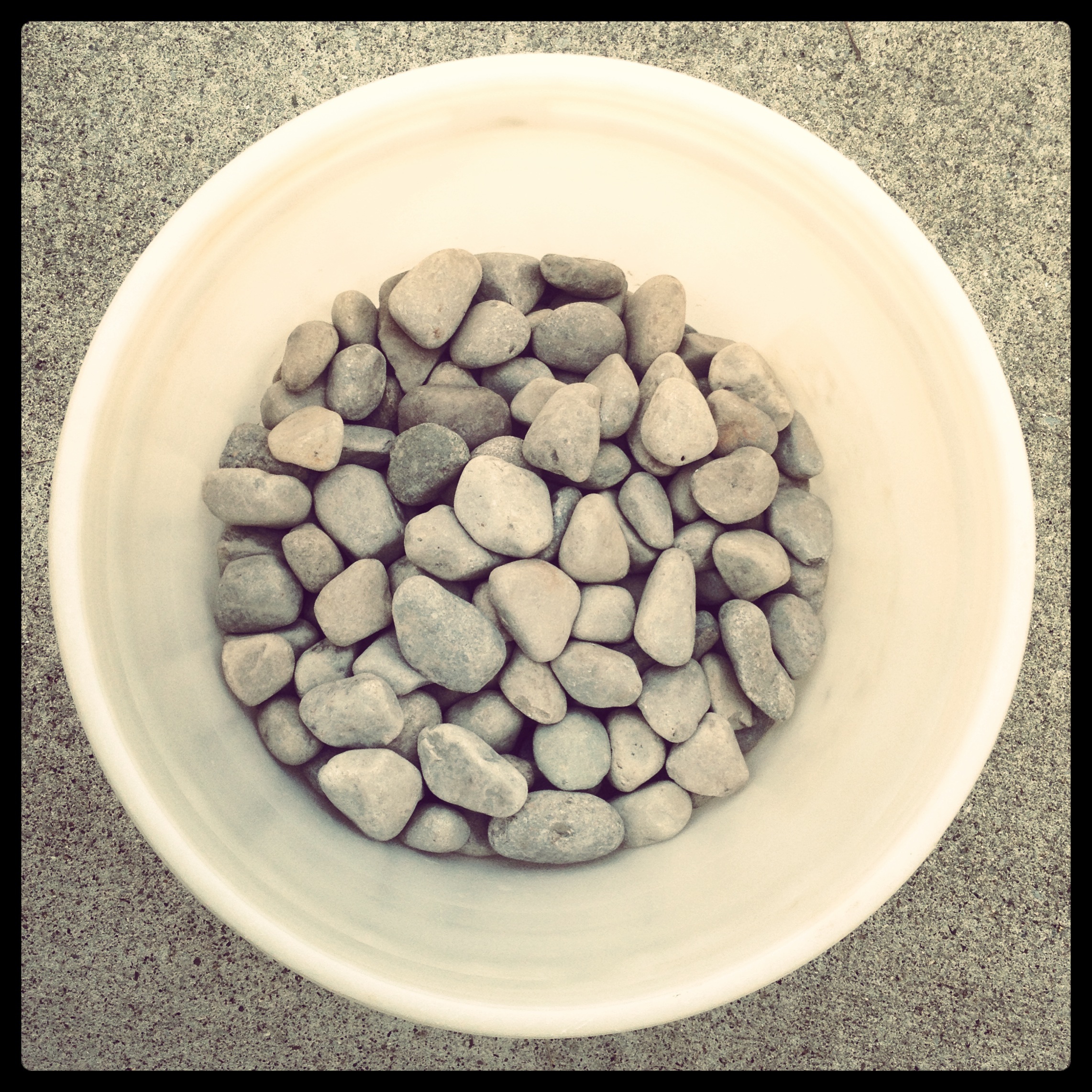
After about an hour, this is what I had:

Photo: CKirgiss
Chosen stones (Photo: CKirgiss)

300 writeable stones, sized between a marble and an egg, variously shaped, chosen straight from a mountain of maybe a million.

They are just exactly what I needed.

But look at them closely, those 300 writeable stones, sitting in the bottom of their bucket: could anything be more blah? More generic? More colorless? More uninteresting?

Or more beautifully breathtaking? You see, when washed from top to bottom, front to back, side to side, with a limitless stream of running water, this is what those 300 writeable stones look like:

Washed stones (Photo: CKirgiss)

Colorful. Vibrant. Bright. Bold. Beautiful.

What a miracle that colorless, uninteresting, dusty, dirty hearts like mine – and like my writeable stones – can be washed clean to expose all the brightly vibrant, boldly colorful, and eminently beautiful essence of the spirit within. (Of course, all that color disappears if the stones are left to dry up – if they forego or move away from the stream of Infinite Living Water.)

What an even greater miracle that hearts of stone can be changed to hearts of flesh – hearts that love and feel and hope and dream and ache and empathize and breathe and are.

I will write on my stones, just as God writes on my heart. But they will always and only be stones. Dead, hard, unfeeling stones. I have no more power to change them into flesh than I do to change my own heart into flesh.

But my powerlessness is the canvas upon which God paints my life in His colorful, vibrant, bright, bold, and beautiful strokes. Indeed. And amen.

The Sovereign Lord says: “Then I will sprinkle clean water on you, and you will be clean. And I will give you a new heart, and I will put a new spirit in you. I will take out your stony, stubborn heart and give you a heart of flesh – a tender, responsive heart. (from Ezekiel 36)


Summer kisses

Besides being a saver, a sewer, a survivor, and a farm woman of the Nebraska prairie, my grandmother was a hider.

An expert hider. What she hid was unlikely to be found. Sometimes even by her.

She hid presents. She hid treasures. She hid tidbits. She hid this-n-that.

She hid it so well that, come Christmas or birthday or tax day or cleaning day, there was a chance that the hidden thing – no matter how essential to the celebration, task, or event –  sometimes never did unhide itself, no matter how much searching or looking or seeking.

The end result was that sometimes when my grandma was looking for an important hidden bank statement, she found instead the previous year’s Christmas present for a distant relative. Or when she was looking for an important Christmas present, she found instead next year’s birthday present (already wrapped but without a recipient’s name indicated anywhere). Or when she was looking for a new box of baking soda she might find an important letter that she’d needed last year.

I learned a lot of things from my grandmother. One of them was to not be a hider, mostly because I know I would be even less successful at finding hidden treasures than she was. (I struggle to find even the unhidden treasures.)

Still, her blood runs thick in my veins.

So on this hot, humid, miserably damp July day, it was quite a treat to reach back into the cupboard in search of honey and find this instead:

Photo: CKirgiss
Photo: CKirgiss

In all their miniature glory, these two lost-and-founds are my grandmother (who hid things), my grandfather (who loved sweet things), and the incarnated babe (whose birth was the beginning of finding all lost things).

These two lovelies have been patiently waiting alongside the Pyrex bowls for eight months, ready since last December to unexpectedly brighten someone’s day.

Mission accomplished.

What’s old is new

When you come from a long line of penny-pinching cost-saving repurposing thrifting immigrant farmers, it only makes sense that old suitcases become corner display units,old suitcases

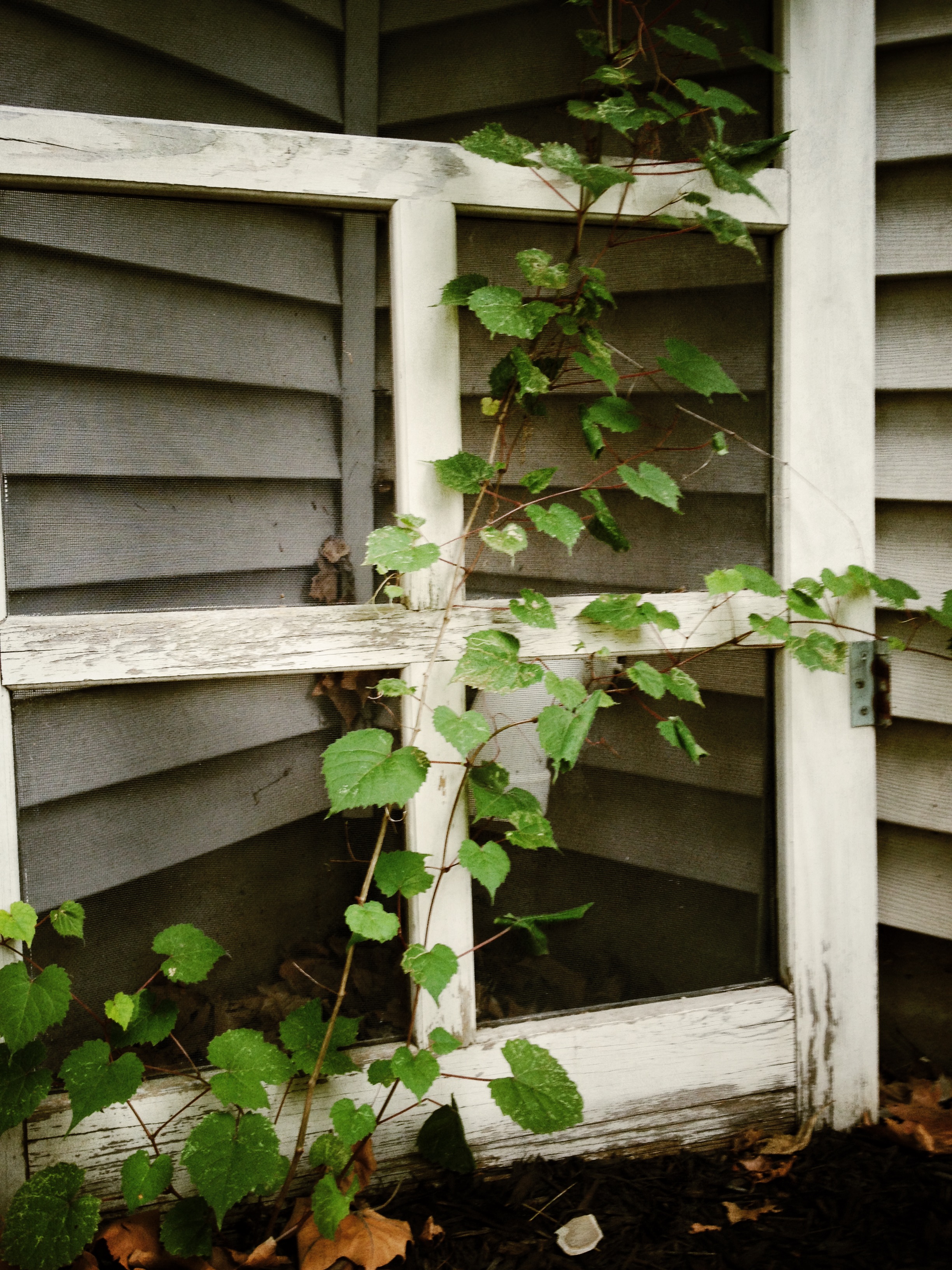
old porch doors become vine trellises,

old porch door

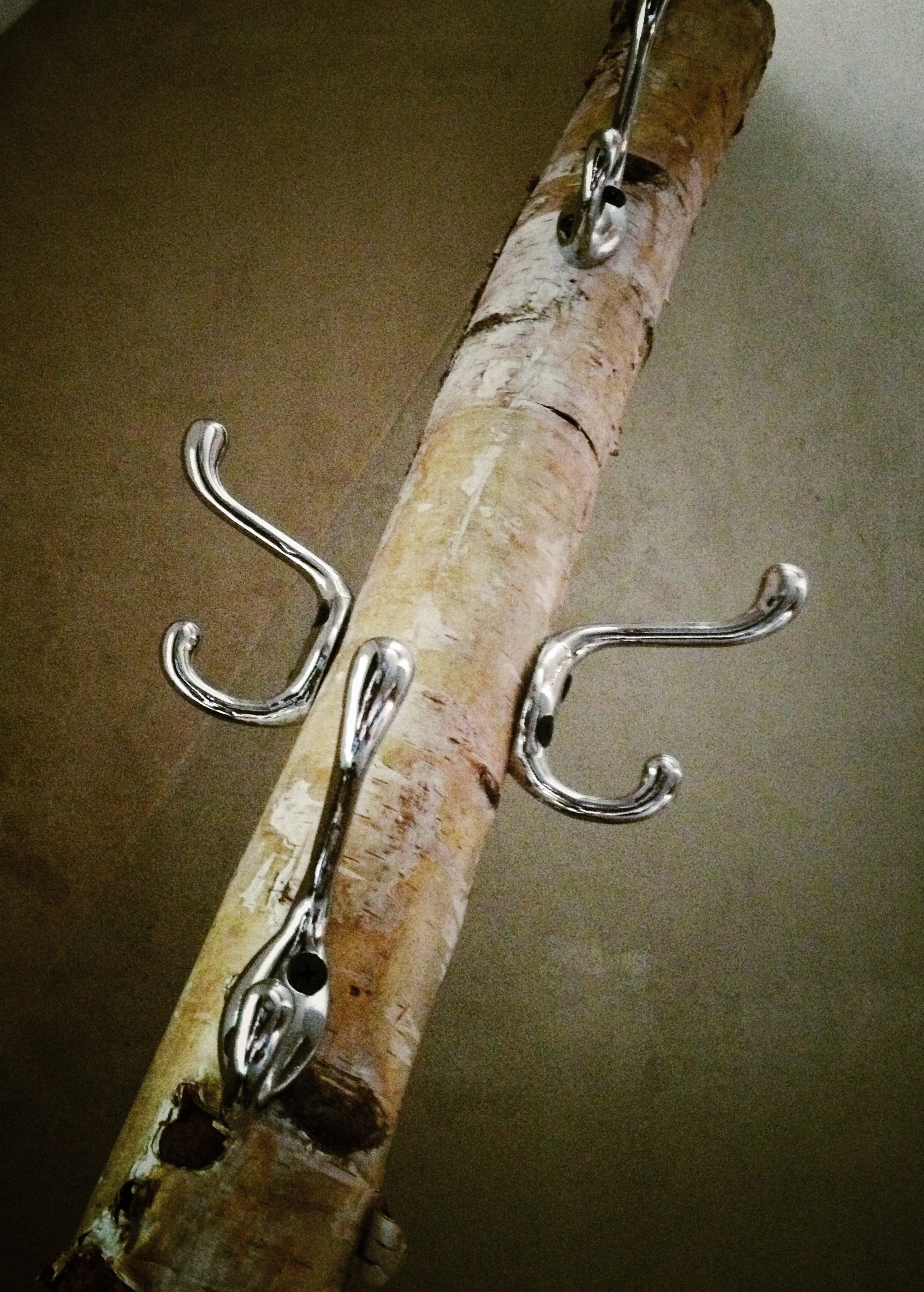
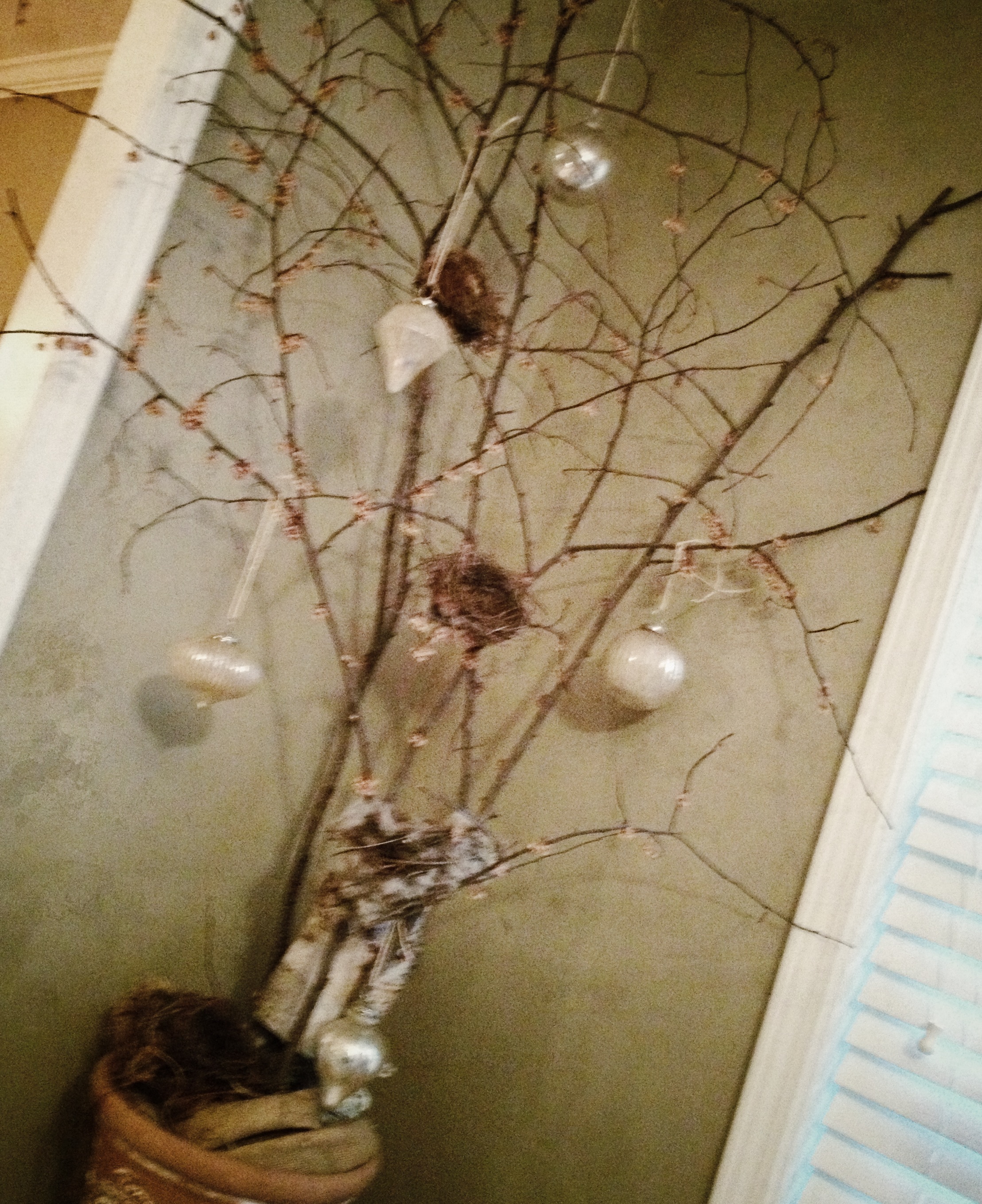
old birch trees become coat trees,

old birch branch

old jars (not new jars that look like old jars) become canisters,

old jars

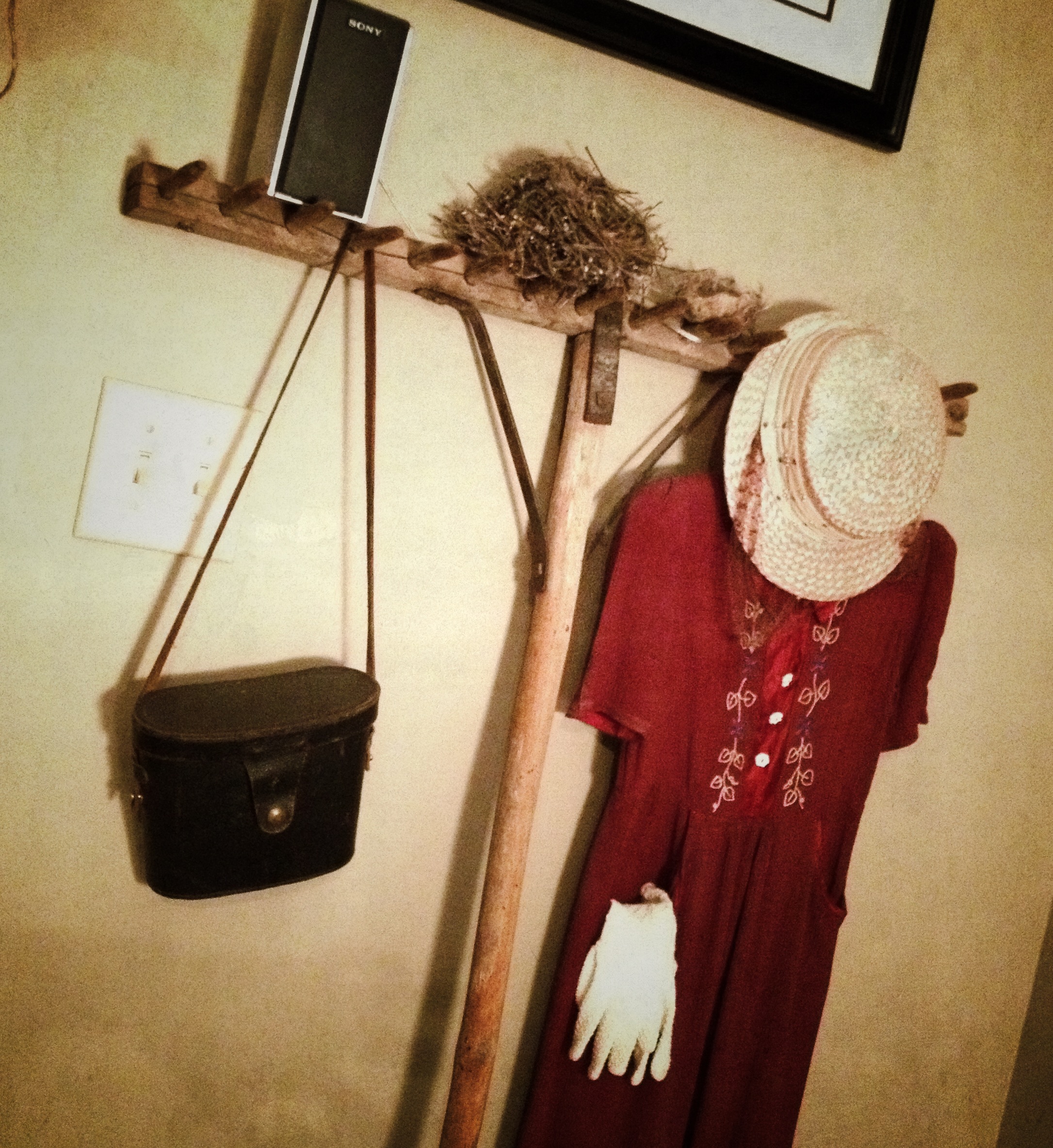
old barn rakes become shelves for other old things (and for the “R” surround-sound stereo speaker),

old barn rake

old bushes become living room art,

old branches

old windows become textile frames,

old window frame

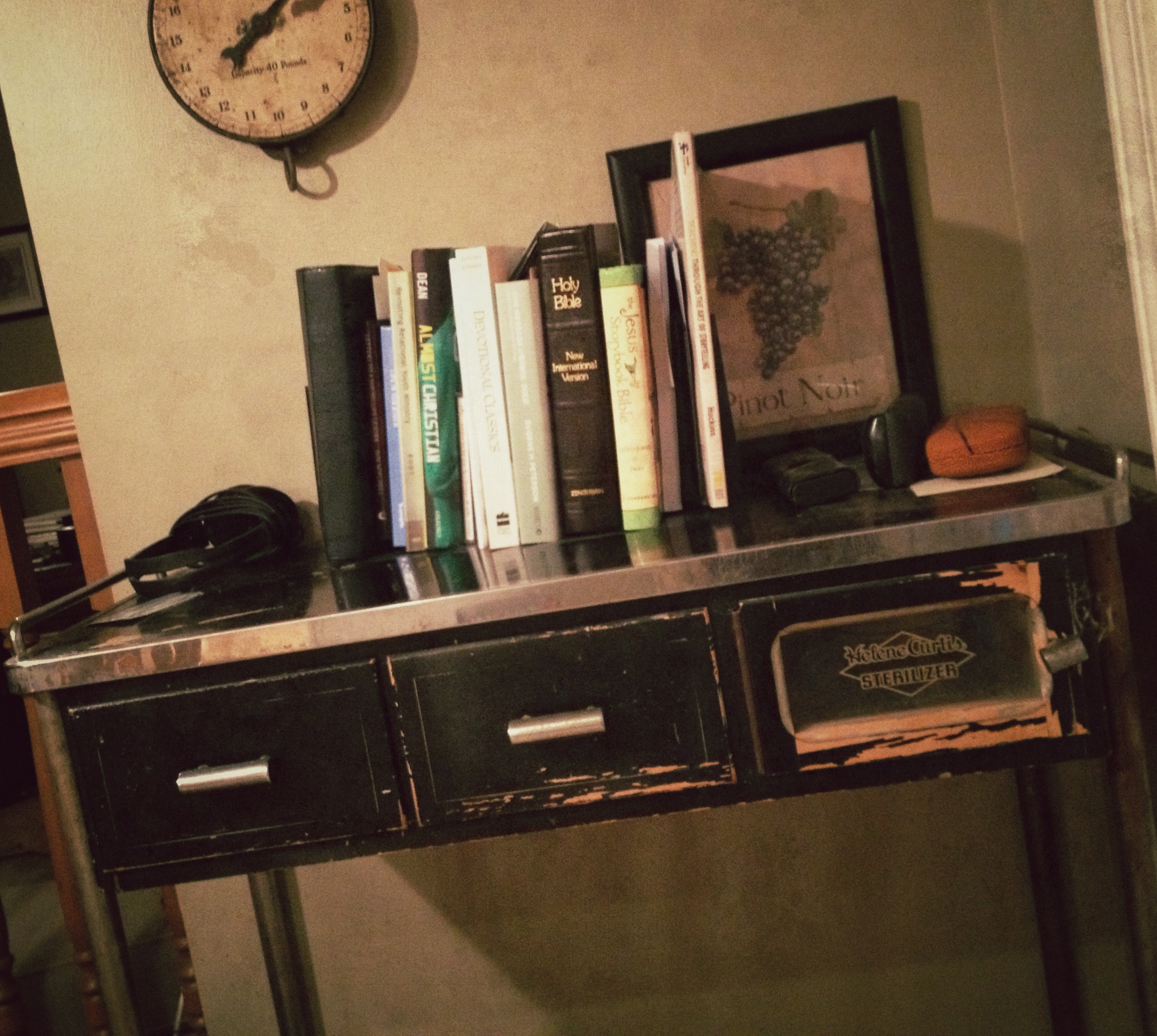
old salon tables become corner kitchen desks,

old salon table

and old shed doors (with the help of a neighbor child and some crayons) become coffee tables.

old shed door

This inherent need to recover, refashion, repurpose, and remake things that I had absolutely no part of making in the first place is perhaps a tiny reflection of why the Maker of all . . . the Maker of me . . . is so set on recovering and remaking what He not only made but what He designed and fashioned with loving care.

What was lost is now found. What was broken is now whole. What was made is now remade.

And for that, the stars rejoice.

Planted where you’ll grow

I used to think that trees had deep roots – that if a person could see the underground part of a tree it would be a mirror image of the tree itself.

Turns out that’s not true. Most tree roots are in the top three feet of soil, and a majority of those are in the top twelve inches.

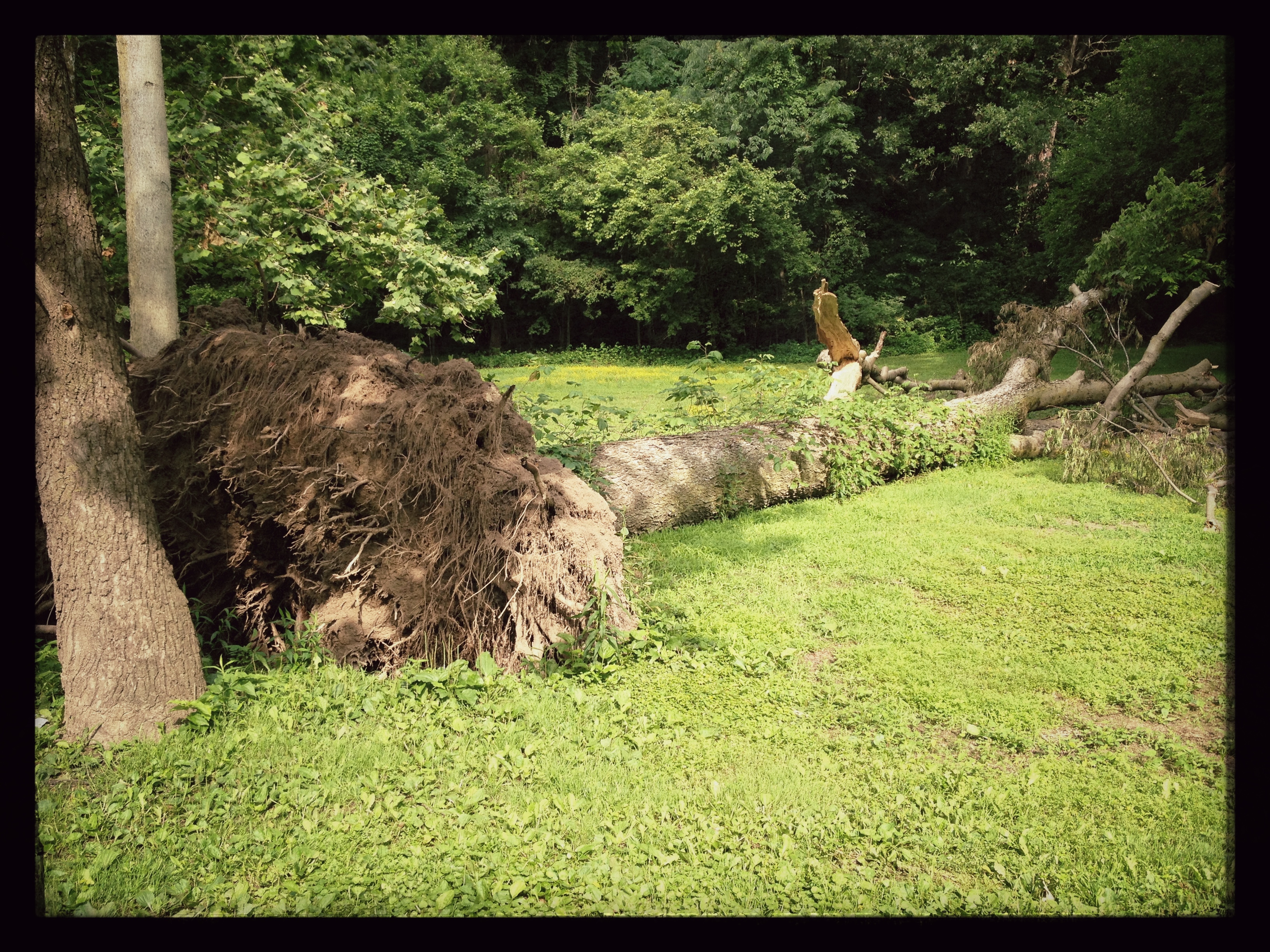
I suppose that’s why this can sometimes happen:

Unrooted (Photo: CKirgiss)

A big ole’ tree, just up and tumbled down in a wind storm, roots and all.

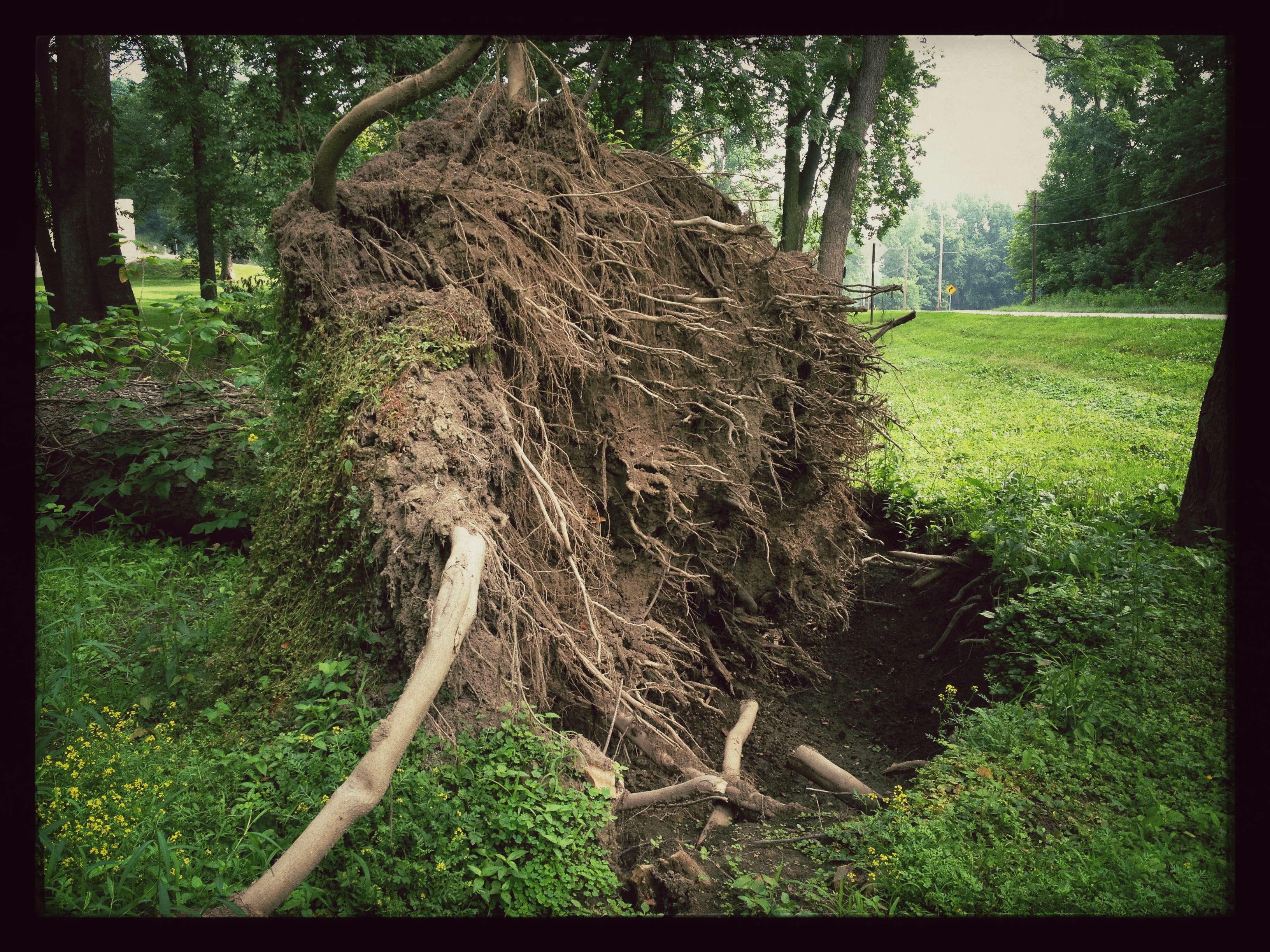
It left a mighty big hole behind, but not near so big as I used to think the root hole of such a giant tree would be.

Unrooted (Photo: CKirgiss)

Jesus’ parable about the seeds makes it clear that deep roots are necessary for a fruitful life.

But deep roots don’t just happen.

They require regular watering (in with life) and diligent weeding (out with death).

But in another sense, deep roots do just happen.

When Christ makes his home in our hearts and when we trust in him, our roots will grow down into God’s love and keep us strong (Ephesians 3:17). As we continue to follow him and let our roots grow down into him, our lives will be built up on him (Colossians 2:7).

In one of the many ironies of Christianity, I have no power on my own to grow deep roots in Christ, but I do have every freedom to prevent deep roots from growing –

– by not drinking deeply of his living water

– by not soaking up his brilliant light

– by not welcoming his gardener’s care

– and mostly by not redirecting myself from self towards him.

Like the tallest tree, I will surely tumble and fall if my roots are sunk into the stinky, rotten, stony soil of me rather than the sweet, rich, saving soil of Jesus.

The noble phrase “grow where you’re planted” is subtly undergirded with self-importance and achievement.

Better to “be planted where you will grow.” Where true Light shines (on even the darkest days). Where living Water flows (through even the driest lands). Where utter Truth prevails (in even the murkiest worlds). And where a loving Gardener does all the necessary work to produce fruitful lives.

Freely dependent hearts

This tumbled out of my backpack the other day when I was with a group of friends:

Little blue capsule (Photo: CKirgiss)

There were a few gasps. A few giggles. A few tsk-tsks.

Apparently, none of those people had a real childhood. Else they would have known this little blue capsule was nothing to tsk over. They would have known it was a Magic Capsule. They would have known the thrill of watching a seeming blob of nothingness be set free by a cup of cool water.

I like to keep these handy for the under-10 crowd. Or me.

Last night I decided to set it free.

At first it looked like this –

Magic Capsule (Photo: CKirgiss)

– which is just boring. No action. No magic. No change. Except that it’s afloat – resting gently, suspended weightless – rather than hidden in unseen corners of the dark and closed world that is my backpack. Encapsulated-but-afloat may not seem like much, but it’s a beautifully far cry from dark and hidden corners.

After about 30 minutes, it looked like this –

Magic Capsule (Photo: CKirgiss)

– which is just creepy. Like a mutant beetle struggling to shed layers of slimy skin. Or maybe like a heart that’s been smashed and caged and suffocated for years inside a soul that is lonely and lost and brittle. The inherent inner beauty can take a mighty long time to reveal itself.

After another hour or so, it looked like this –

Magic Capsule (Photo: CKirgiss)

– which is just weird. Like a cockeyed baby pterodactyl screeching in its very first flight. Or maybe like an unfolding heart that is learning to trust and breathe sweet air for the very first time. The steadied balance can take a mighty long time to discover.

A little later, it looked like this –

Magic Capsule (Photo: CKirgiss)

– which is just confusing. A plane? A sword? An inverted mythological thunderbird? Or maybe a bundle of unknown possibilities, like a heart that is just starting to unfurl its wings and sip the promises of love and life and re-creation.

Finally, it looked like this –

Magic Capsule (Photo: CKirgiss)

– which (as best I can tell) is a magically-capsuled-sponge-version of the delicate miracle known as a dragonfly.

Its proportions aren’t quite right. Its details are sorely lacking. Its shape is rather fuzzy. Its color is all wrong –

– much like my heart that will need a lifetime of pruning and shaping and transforming and refining before resembling anything close to what it was originally meant to be.

The more I learn of God and draw near to Him, the more aware I become of just how tightly and terribly encapsulated my heart really is. What a bittersweet irony.

But what a sweet opposing irony is this: the more dependent on Him I become, the more free I really am.

The end result of my heart’s transformation is a lifetime away. Until then, each and every stage of the process – whether sorrowful or sweet – is a miracle of my re-making.

Welcome to Love. Welcome to Life. Welcome to Freedom.

© Crystal Kirgiss 2013

The one where you meet Ryan

Meet Ryan, Assistant to the Area Director of Greater Lafayette Young Life.

Young Life friendship

Basically, he’s awesome. True story.

8 years ago, Ryan was a high school student. He attended every home basketball game. He came to every Young Life event. He filled wherever he was with his enthusiastic energy.

6 years ago, Ryan went to a week of Young Life camp. He zip-lined. He para-sailed. He did the climbing wall. He made people laugh and smile and dance for joy.

3 years ago, Ryan served on summer staff at Young Life camp. He ran the gear locker. He organized, inventoried, and distributed athletic gear to nearly 400 campers each week. Seeing as how he works in the athletic locker room of Purdue University, he pretty much rocked it.

2 years ago, Ryan was handpicked to be the Assistant to the Area Director of Greater Lafayette Young Life (the man I call husband). He waits promptly on his front steps each Monday night for a 7:15 personal pick-up. He evaluates each element of club both kindly and candidly. He graciously and honestly shares his feedback, which is almost always spot-on.

Today, Ryan is an established member of the local Young Life leadership team. He’s seen it all. He’s known by all. He believes in all.

And we are all richer for knowing him, wiser for hearing him, and more joyful for loving him.

Basically, he’s beyond awesome. True story indeed.